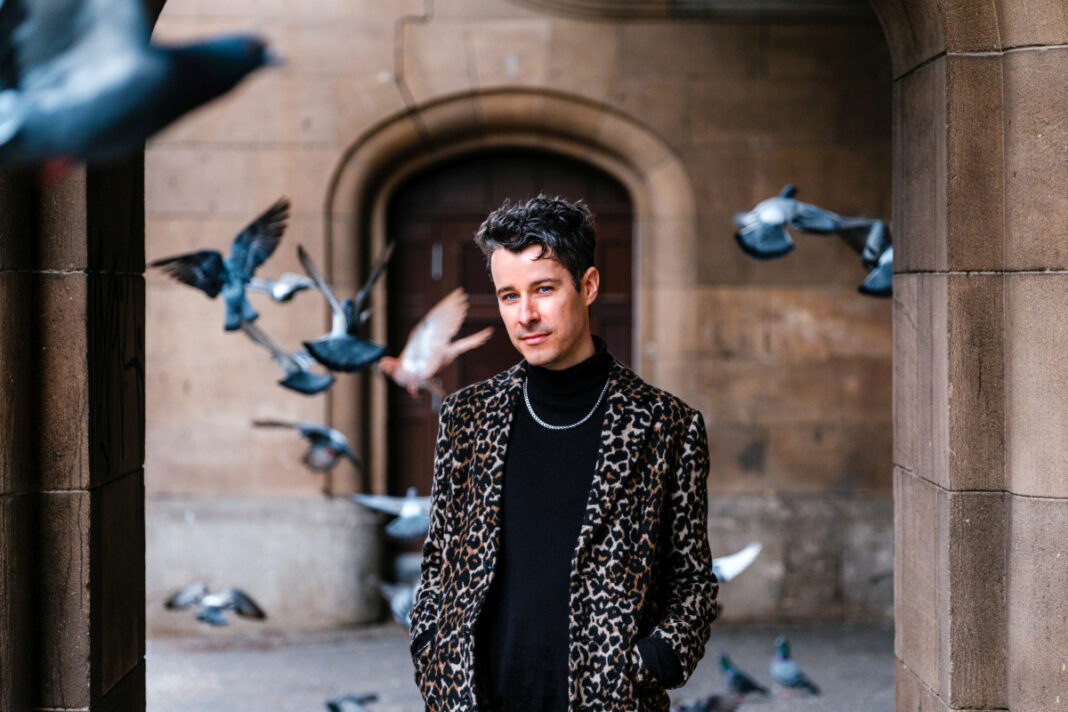
Writer Liam Cagney grew up in Donegal, Ireland, what he describes as “the middle of nowhere, a beautiful place but quite remote.”
He first arrived in Berlin, Germany, in 2006 to study fashion—it was the first time he set foot on continental Europe. Cagney and his friends loved to party, so they ended up partying in lots of underground places including Berghain nightclub, which had just opened two years earlier, in 2004.
“I hadn’t heard of it before, but I had an incredible experience there. I hadn’t been anywhere like that before,” says Cagney. He moved to Berlin briefly in 2010, then again in 2016, when he became something of a regular at Berghain.
Berghain is the successor to the well-known gay club Ostgut, which closed in 2003. Its gay founders did not position their new club exactly as a capital-g gay bar, but focused instead on creating a space that was about freedom, especially sexual freedom with a queer twist. Berghain quickly became the subject of curiosity. It’s big—the building used to be a power plant—with a capacity of 1,500 people. The club’s Saturday night party starts at midnight and continues nonstop until Monday at 8 a.m. The bouncers select and reject patrons from the lineup by some frustratingly undefinable criteria. No photos are permitted inside. A gay sex club called Lab.oratory is located in the basement. In 2016, Berghain was designated a cultural institution, which allows it to pay a reduced tax rate, resulting in speculation about whether this is one of the reasons it operates in such a particular way. The owners never publicly comment on anything.
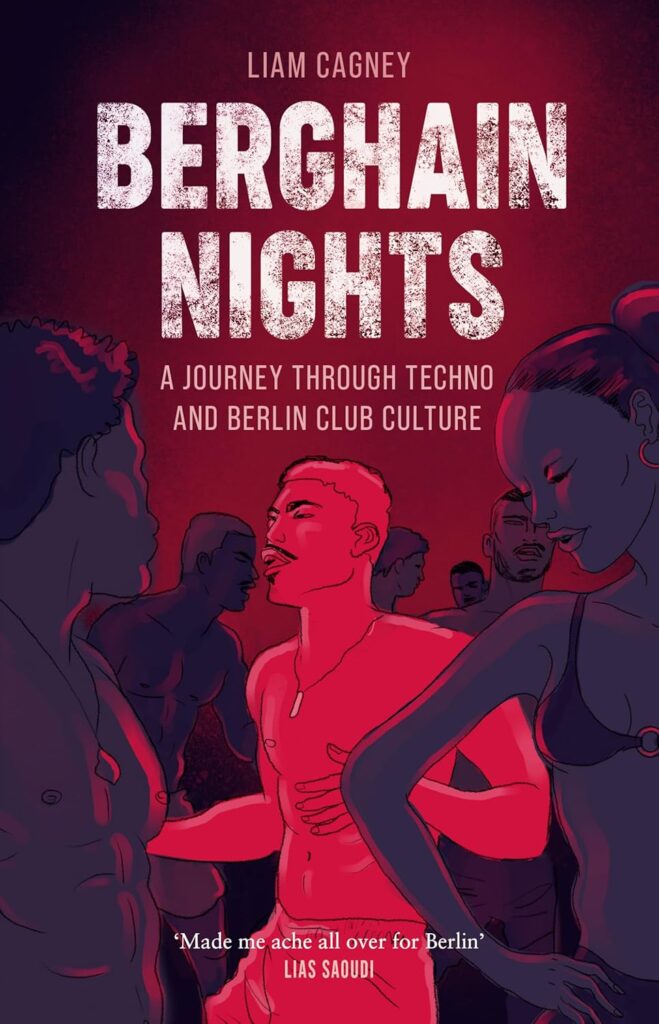
Cagney’s new book, Berghain Nights: A Journey Through Techno and Berlin Club Culture, published in November by the U.K.’s Reaktion Books, capitalizes on our fascination with Berghain and Berlin nightlife in general. A first-person memoir/analytical essay, the book takes the reader on a journey from the origins of techno music to moments of nightclub washroom breakdowns. Pink Ticket Travel talked to Cagney about Berghain, Berlin nightlife, and his own journey as a clubgoer and now as an author.
What’s the appeal of Berlin as a place to live?
I’m from the countryside. Despite Berlin’s size, and despite half of it, the east side, being full of brutalist buildings, it has a lot of green space. Where I’m living now, which is in the former east, with a big Soviet war memorial just down the road, there are trees everywhere. Because of its history as a divided city, Berlin doesn’t really have a centre in the same way some other cities do, which is similarly appealing. It’s diffuse and scattered. At one point the rents were cheap. Back in 2010, I had a nice place for 200 euros a month. Basically, you can do anything you want here and people won’t bat an eye. I literally saw somebody walking down the street naked.
There’s a tremendous mythology around Berghain, which is probably the world’s most famous nightclub. Your book describes some of what goes on inside and tries to pull back the curtain around what makes it special. What are some of the key ingredients of its mystique?
Its grandeur as a building, this Soviet thermal energy plant built in a classical style. Its non-functional architecture, meaning you can’t see inside. There are no transparent windows. When things are blocked from view, they hold a fascination for us. The no-photo thing comes from it having roots in queer spaces, people not having to be self-conscious that they’re under scrutiny. Musically, it’s techno. You can do whatever you want as long as it’s consensual and you’re not ruining somebody else’s vibe. That freedom appeals to people. It’s a non-heteronormative space, a queer space, though that’s less the case now. The queerness is unique for a lot of straight tourists who go there. They’ve never been exposed to that before, and it makes them start to think about themselves. Maybe it changes them.
Is Berghain an ambassador for Berlin’s larger nightlife scene, part of the fabric of it, or is it in its own universe?
I think there’s a real danger, and I’ve contributed to it, to overemphasizing brand name clubs like Berghain, Tresor, Kit Kat, fed by digital consumption. People have gotten less adventurous, and if your readers come to Berlin, I’d strongly encourage them to explore smaller clubs, smaller parties. There’s such a great selection in Berlin. (You can find some of them in Pink Ticket Travel’s insider’s guide to Berlin.) Berghain is not the be-all-and-end-all for many people, myself included. It’s not as appealing as it once was. Drake was there a few weeks ago with a buddy.
The beginning of the end.
They were always saying that when I arrived in Berlin. If there’s one thing that Berghain has shown about itself, it’s that it knows how to reinvent itself every five years. It’s very well managed in that sense.
Your book takes us through some dark and, by some standards, scandalous moments you’ve had inside the club. Can you share a memory or two?
You have to be careful about oversharing. It’s not just a hedonistic or escapist place, but a cultural space where people have rich, transformative experiences, experiences that have always been tied to art. I think it’s sort of like an immersive artwork in a way. There’s one chapter in the book where I write about experiencing a set by the techno artist Rrose, a queer artist. It was a really nice Sunday afternoon. After Rrose’s set, I went out to eat something and was queuing to re-enter. I saw before me a woman with long dreadlocks, a senior citizen, and a young man beside her. The man was talking to the bouncer in an American accent. He said it was Mother’s Day in the U.S. and he had brought his grandmother. “She’s visiting Berlin, and I want to bring her to the club. She’s 86 years old.” The bouncer kind of looked for a second, then pointed them inside. I thought it was so wholesome. Later on, I was walking around and I saw the 86-year-old sitting on a sofa beside a bear who was off his face. He was chewing and gesticulating and saying something to her with a lot of passion. She was nodding and taking it in. You see stuff like that all the time. One of the things about clubbing in Berlin is that it’s all ages. It’s not just about young students getting wasted.
I was there three weeks ago, and I saw a mini Berlin celebrity, Günther Krabbenhöft. He’s almost 80 and dresses like a debonair gentleman with a bowler hat, suit and dicky bow. He was dancing on some old industrial canister in the garden. Things like that are good for your heart. I’ve seen a lot of depraved things and I don’t really think I need to talk about them. I say “depraved” affectionately, because I like that. I like being around people who are un-self-consciously expressing themselves sexually.
In the book you describe yourself as neither gay nor straight, but you do go to the men-only party Snax, which takes place in Lab.oratory, in the basement of Berghain. You give a history of the party, which is fascinating. Then you describe the attendees as muscle men in a stupor: “the air stank of chemical sweat. None had the faintest interest in the music…. It was a boring gay circuit party, full of dead-eyed ventriloquists’ dummies.” You didn’t love it.
My queer identity is complicated. I don’t know if it makes sense to other people. I would say I’m bisexual. I’m in a straight, long-term, monogamous relationship, though not only a straight relationship. On a deeper level, I’m nonbinary. It’s a lot of tension, which I’m still working through. I was looking for an identity, which was part of why I went to Snax. To be honest, I knew I wouldn’t enjoy it. I’ve got gay and bisexual friends who go to it and enjoy it. One of them told me that as soon as you go inside, you’re being eye-fucked all the time. You’re not engaging with people. It’s not really my thing. But then, I did have a great chat with someone who is, I don’t know—I don’t know if I’d consider him a friend, but he’s someone I talk to pretty regularly.
Your book ends on a note of, I think, disillusionment. How has your relationship with Berghain changed?
People have said that about the ending. I still go. For the techno. I go clubbing sober these days. It’s a meditative thing. But as a queer space, it’s very diluted. I prefer smaller queer parties these days.
You never seem to have problems getting into Berghain, so I have to ask: What can someone do to get past the bouncers?
The main thing, which is maybe not of much use to visitors who are only visiting Berlin for a week or so, is to be recognized by the bouncers. Usually the same bouncers work the same shifts every weekend. They’re good at recognizing faces. So you go around the same time a couple of times a month for a few months, and they’ll start recognizing you and will let you in. If there are other bouncers there who don’t know you, maybe they’ll reject you even if you’re there all the time.
How do people get in? Be confident and be yourself. There are a lot of myths around it, about how you have to dress in black. I would advise against that. I think you should dress however you’re comfortable, in what makes you feel confident. Clothing is something that gives you confidence. Style is something that lets you express yourself and be confident. The bouncers are wondering, “Is this somebody who respects a queer space? Is this someone who can last, who can endure for eight hours or more in here?” One time I was sitting in the garden of Berghain just chilling. I saw this guy coming toward me dressed in a football jersey. You never see that. I said to him, “Nice football jersey! What’s the team?” It was a team in Australia and he was an Australian visiting Berlin for a few days. All these guidelines on what to wear. He ignored them and just wore a football jersey. He got in. I think the bouncers might have thought, “Nice to see someone wearing something different for once.”
This interview has been edited for length and clarity.