Stow is a village of 718 people in the Scottish Borders and its name is pronounced to rhyme with “wow.” The Scots talk cute like that.
“Wow” was exactly what I said when I arrived in the village, our rental car winding its way out of the woods, the view opening up on a picturesque valley. The wow wasn’t because Stow was once home to a church built in 826 C.E. by King Arthur, to thank the Virgin Mary, who had appeared to him in a vision, for success in battle—though Stow’s Our Lady’s Well has been a pilgrimage destination for more than 1,000 years. I’m not that kind of pilgrim.
Nor was my wow for the ruins of the bishop’s palace, which had its heyday in the late 15th century; nor for the ruins of a 13th-century church, which is, these days, a photogenic shell of a building. Palaces, castles, stately homes, ancient churches and assorted ruins thereof are pretty much standard for even a short drive around Scottish Borders, the Scottish region that—it’s right there in the name—borders England.
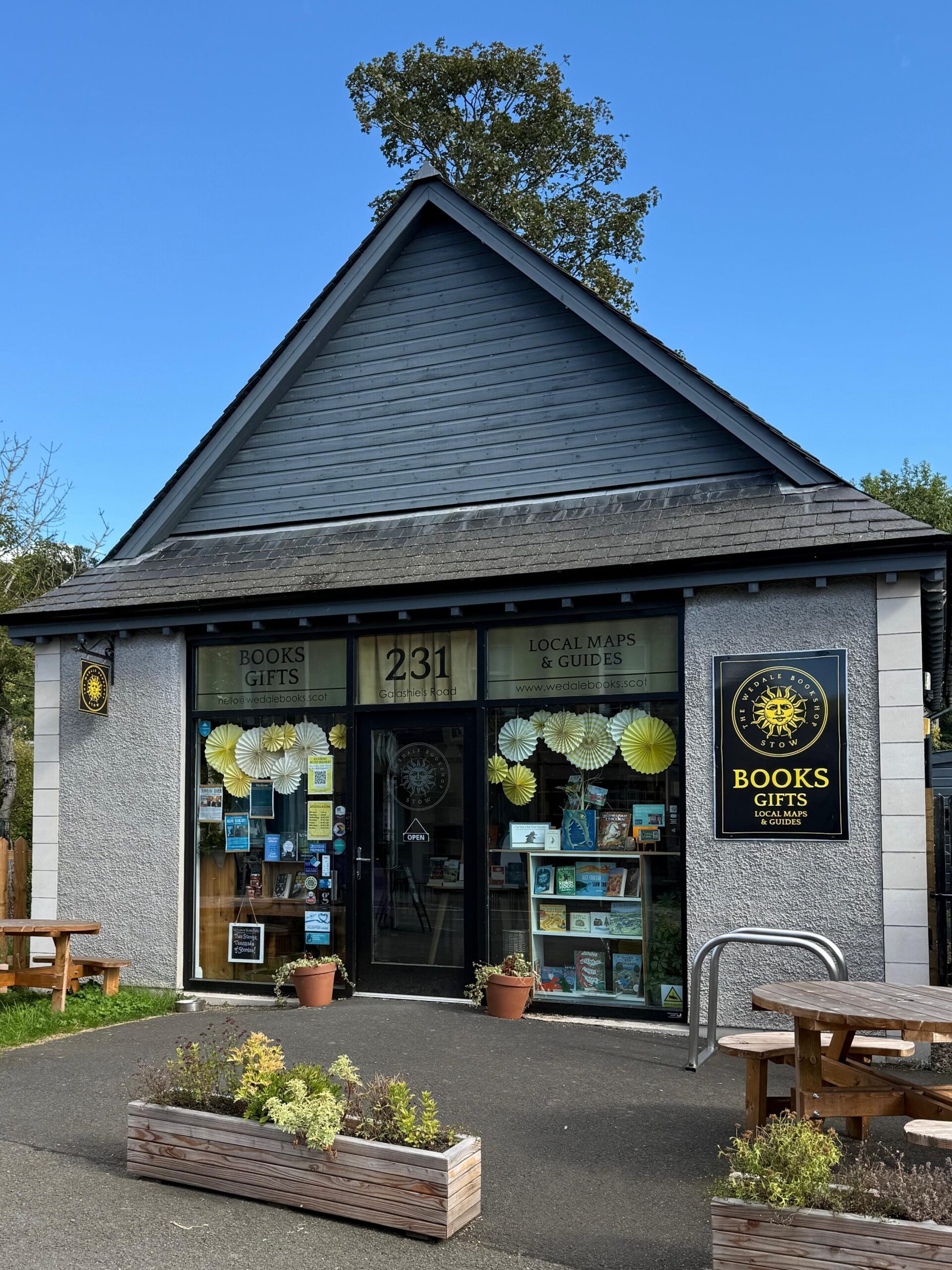
No, my wow was for The Wedale Bookshop (231 Galashiels Rd., Stow), an adorable and bigger-than-one-would-expect book emporium, decorated with “Read with Pride” tote bags and photos of famous queer writers, selling merchandise like rainbow-patterned socks along with the LGBTQ+-themed titles peppered through its mainstream selection, as well as hosting a regular book club. Stow has just three businesses (there’s also a café and a store), and one of them is proud of its queer collection. Out proprietor Gordon Stewart opened the shop in 2023 as a dream business, moving his life down from Edinburgh when he found a property that suited him. As tiny as Stow is, Stewart told me that it’s a vibrant community-minded place; across from the store is a long wooden fence on which hangs a chalkboard for locals to write their upcoming events and announcements. Take that, Facebook.
Stewart is not alone in queering up the mostly rural south of Scotland. In the nearby market town of Galashiels, Bulldog Bakes (58 Channel St., Galashiels), a dog-friendly café and bakery, is run by a friendly gay couple. There are no rainbow flags, but the sign over Bulldog’s service counter declares “Every coffee served with a dash of sass.” Café ReCharge (58 Island St., Galashiels) is an LGBTQ+-friendly not-for-profit that uses unsold supermarket produce to make affordable and delicious meals, which are pay-what-you-can on weekdays. The venue hosts Café Polari, a monthly meetup for LGBTQ+ people and allies.
A region that’s been fought over and influenced by the Romans, the Vikings, the Anglo-Saxons and, of course, the Scottish themselves, the culture of Scottish Borders is slippery and multilayered—as are the local accents. The historic town of Berwick-upon-Tweed, about an hour’s drive from Stow and pronounced “BERR-ick uh paan Tweed,” changed hands between England and Scotland an estimated 13 times before being annexed by England in 1482. The River Tweed marks the eastern part of the English-Scottish border, so Berwick is weirdly not on the side of the river you expect it to be. It was the starting point for a tour around the Scottish Borders. I brought along a Canadian friend for company and to help with the driving.
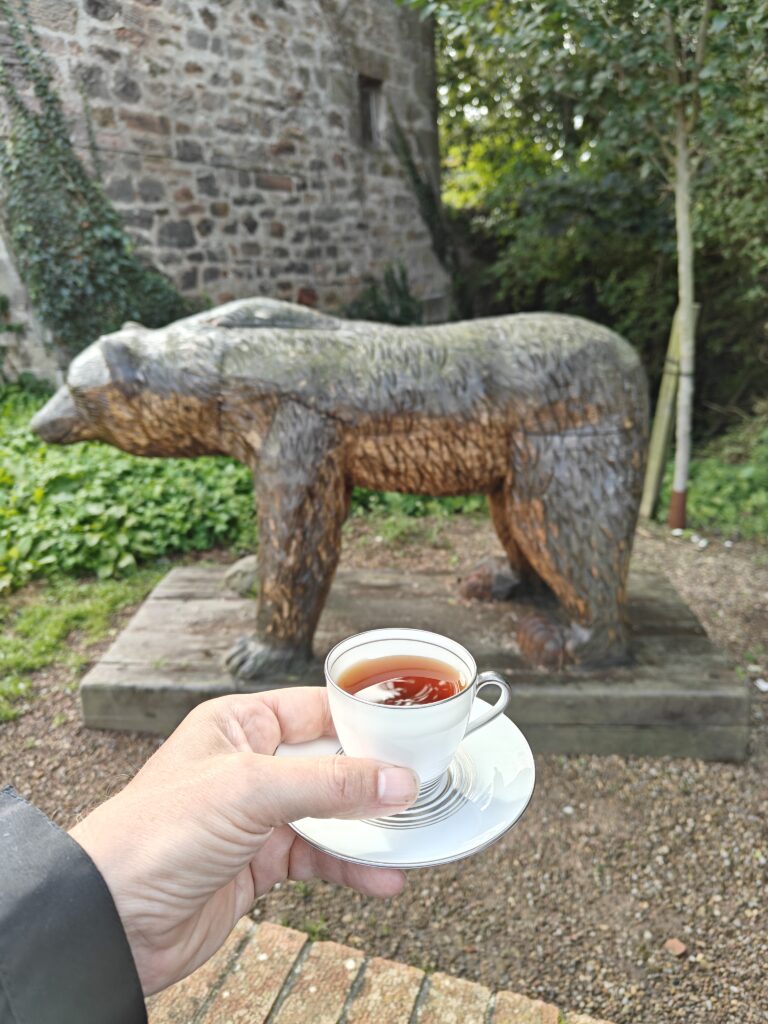
Our introduction to this culturally fluid region was a scrumptious walking and eating tour of local cuisine and history around Berwick with Katrina Reynolds, the tartan-wearing co-proprietor of Borderland Food Tours. As someone who is constantly back and forth across the border (she lives on the Scottish side of the Tweed), she declared that “it can be hard keeping it all straight.” When Reynolds hauled out a bottle of Traquair brewery’s Bear Ale and another bottle of Lindisfarne Mead before the clock struck noon, I knew she meant business. The drinks helped wash down the meat pies and haggis balls she’d pulled out of her insulated bag, which she carried with her as we visited various historic sites around the mouth of the river. Almost immediately I was seduced by this grey area straddling two nations, and by Katrina’s passion and humble charm.
With Northumberland and Cumbria to the south, the North Sea to the east and Edinburgh not too far north, the Scottish Borders’ rugged coastline and rolling green hills are easy to reach. In fact, even Stow, which feels like a remote Hobbit village, has its own train station that makes it just a 45-minute ride from Edinburgh. During our three days in the region, we drove our rental car over lush hills dotted with cattle and sheep, along one-and-a-quarter-car-wide roads though landscape that could easily be golf course after golf course, the land was that clean and manicured. At ancient stone bridges, we stopped to let oncoming cars pass, taking the opportunity to look at the sun-dappled rivers and streams below.
We based our visit in Selkirk at the Philipburn Hotel (Linglie Rd., Selkirk). Located on the edge of town, the hotel was a rustic retreat—a smartly renovated 1750s home where no two rooms are the same—and a perfect crashpad from biking or hiking around the region. Evening drinks by the fireplace were an essential part of the experience. Though there were no rainbow flags around, the owner of the property came out as gay upon our arrival, and later during our stay, while we were eating in the hotel restaurant, he introduced us to his husband.
From Selkirk we were able to easily visit Jedburgh, home to a ruined 12th-century abbey, a museum and 16th-century tower house dedicated to Mary, Queen of Scots, and some nice restaurants; Melrose, which has its own ruined 12th-century abbey (take that, Jedburgh!); and Hawick (pronounced HOYK—I stopped marvelling at pronunciations after this one), which is primarily known as a place to buy Scottish whiskey, cashmere and tweed (the rough patterned fabric, not the river).
Hawick is also home to Alchemy Film & Arts, a film festival (April 30 to May 3, 2026) that offers year-around arts development programs and residencies. Founded in 2010 to celebrate experimental film and artists’ moving images, the organization’s slogan is “Embrace the strange.” The festival’s current curation leans heavily queer, co-director Rachael Disbury told me when I popped by the offices, which share a building with a café, performance space and year-round cinema.
Disbury said the festival has put Hawick on the international film map as Scotland’s “Film Town,” but that the community itself, population 13,500, is not as open as she’d like it to be. Yet Disbury admitted, when I asked her a few questions to break past her modesty, that Alchemy’s efforts might be helping change things. The array of people from different parts of the film world, the arts world and the LGBTQ+ community who show up in Hawick because of the festival has helped locals experience more diversity and has triggered more curiosity about the larger world.
No visit to the Scottish Borders is complete without a visit to Abbotsford, where Sir Walter Scott, the novelist, poet and historian, made his home in the early 1800s. Though Scott was not queer according to any historical records, this champion of Scottish culture was certainly a little aesthetically bent. Abbotsford, which has been open to the public since 1833, the year after Scott’s death, has towers and lookouts you’d expect to find in a medieval castle, and is chock full of tchotchkes and oddball sculptural items. The entryway alone overwhelms visitors with shields, skulls, armour and statues. Scott was a packrat with fantastic taste and panache at displaying it all. The gardens, full of heathers, thistles, ferns and other local species, never lets a visitor forget where they are as they wander the grounds.
Though our geographic introduction to the Scottish Borders had been its rivers, hills and valleys, our final stop was its rugged North Sea coast. We made our way out to St. Abbs Head for a hike. This is where Great Britain starts to rise higher above the sea, where the environment gets rough and craggy and dauntingly beautiful. There are some fine beaches just south of St. Abbs, but for the drama, it’s hard to beat these black and grey cliffs that drop down from verdant hills and sculptural rock formations. As the warm wind whips off the sea, I look out at the water and realize that the nearest land is Denmark, more than 600 kilometres away. Edinburgh is just over an hour’s drive away, 90 minutes by train, but the world beyond this landscape seems so remote.
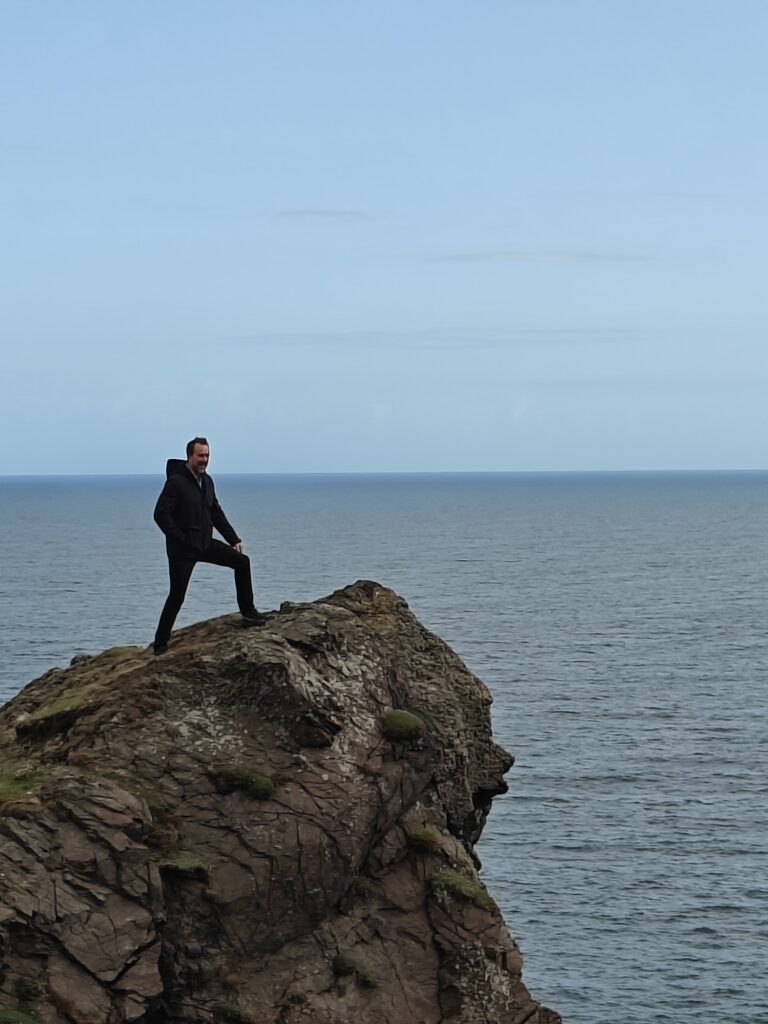
The feeling was surprising. This region, so overlaid with centuries of culture, with so much interchange between two of the countries that share this island, and so well connected, can provide the feeling of being on the edge of the Earth.
Where we stayed
Philipburn Hotel (Linglie Rd., Selkirk). Surrounded by four acres of private gardens just on the outskirts of town, the vibe is a comfy LGBTQ+-run manor home, with 20 unique rooms and a lounge where guests and drop-ins can have a drink by the fireplace while discussing the adventures of the day. There’s a restaurant on the premises and the hotel also hosts events like weddings. Part of Best Western’s BW Signature Collection.
What we saw & did
Abbotsford (Melrose). The former home of Sir Walter Scott has been a tourist attraction for almost 200 years, opening to the public just a year after Scott died in 1832. There’s a reason for its long-time popularity. It’s beautifully weird, a small farm house renovated into something of a fantasy castle, with highly personalized spaces and gorgeous Scottish gardens.
Paxton House (Paxton).This Georgian mansion, completed in 1758, has a sad history. The Palladian home was built by Patrick Home of Billie, a member of a wealthy family, to please a Russian woman. But they never married and she never set foot in the house. The property is filled with regency furniture, including lots of Chippendale, and over 70 paintings from the National Galleries of Scotland, including works by Raeburn, Wilkie and Lawrence.
The Borders Distillery Tour (Commercial Rd., Hawick). Opened in 2018, this is the first whisky distillery operating in the Borders since 1837. The operation nicely balances the historic and contemporary approach to whisky, gin and vodka production. The friendly staff explain how their delights are made before giving visitors an opportunity to taste them.
Melrose Abbey (Abbey St., Melrose). Being so close to the border, Melrose Abbey, built in the 12th century, was repeatedly attacked by the English during the Middle Ages. It’s had a rough go of it, but there’s still a sculpture of a pig with bagpipes visible up there in the architecture. Rebuilt in the 1380s, it was used as an abbey until the Protestant Reformation of 1560, with existing monks allowed to stay on until 1590. Who knew what those monks were up to before they started saying prayers at 2 a.m.?
Jedburgh. Though many towns in Scottish Borders have a little something-something of historic interest, Jedburgh punches above its weight with the Mary Queen Of Scots’ Visitor Centre, a 16th-century tower house with exhibits about the monarch, the ruins of a 12th-century abbey and Jedburgh Castle Jail & Museum, a 19th-century jail built in a former castle.
St. Abbs. This photogenic fishing village, surrounded by jagged cliffs, is a launching pad for activities like sea angling, diving, bird-watching and sightseeing boat trips.
National Trust for Scotland St Abbs Head Nature Reserve. These three trails, which can be combined for a three-hour hike, take visitors along dramatic black-rock cliffs to a lighthouse, around cute Mire Loch and through well-manicured farmland. The visitors’ centre has a restaurant, gift shops and an exhibition on the nature of the region. Parts of Apple TV+’s The Buccaneers were filmed in the area.
Alchemy Film & Arts (Hawick; April 30 to May 3, 2026). This 16-year-old festival of experimental artist-made films, many of them by LGBTQ+ filmmakers, attracts fans of offbeat cinema from around the world.
Where we ate & drank
Borderland Food Tours. Local restaurateurs William and Katrina Reynolds offer three different tours (a three-hour walking tour, a picnic and a day-long bus tour) based out of Berwick-upon-Tweed—though officially in England, the town is pretty darn Scottish. Serving food and drinks from local producers with a story and a smile, the tour is an excellent way for a visitor to satiate both their appetites and their curiosity.
re>
The Capon Tree Town House (61 High St., Jedburgh). Named after a local tree that’s an estimated 500 years old, this award-winning restaurant is led by local chef Alasdair Wilkie, who founded the restaurant at just 23 years old. More adventurous than you’d expect from a small-town Brit, Wilkie is looking for a Michelin star. It’s a place for a smart drink and they also have a very stylish inn.
Ebbcarrs Café (the harbour, St. Abbs, Eyemouth). Dig out your chunkiest cable-knit sweater to wear while eating a bowl of cullen skink (fish and potato soup) and sipping tea between breaths of North Sea air. Now, that feels like Scotland.
Bulldog Bakes (58 Channel St., Galashiels). No, the bulldog does not actually do the baking—that’s left to one half of the gay couple that runs this pet-friendly café. Galashiels is the largest community in the Scottish Borders and home of the Great Tapestry of Scotland, 160 embroidered panels that chronicle Scotland’s history, so visitors to the region have no reason not to stop by for a scone.
Tibbie’s (28 Market Pl., Selkirk). The schtick at this relaxed restaurant is sharing plates, usually dominated by local produce including Scottish cheese. Nice for dinner—there can sometimes be a theme or show—but best known for breakfast.
The writer was a guest of Visit Scotland and Visit Britain. The hosts did not direct or review coverage. The views expressed are the writer’s own.