If you ask a Spaniard, many will say that people from Andalusia are lazy, religious, patriarchal and folksy. They’ll say those from this southern region care more about flamenco and bullfighting than working a 40-hour week or even pronouncing all of their words correctly. They’ll say that Andalusians ride horses everywhere, that they are living in the 19th century, that they talk too fast.
Most of this is just jealousy. Some of those things are true. Andalusians do talk quickly, which can be unnerving for anyone without an advanced level of Spanish. They also conduct their personal and professional lives in a casual manner. But considering the temperature in Andalusia approaches 40 degrees in the summer, one can speculate that committing too seriously to anything would be unhinged. Also, yes, they care very much about flamenco.
Andalusia, which has a population of about 8.6 million, is known for its sunshine, varied geography and rich history (including the Moorish legacy of architecture and traditions dating back to the rule of the Moors between the 8th and 15th centuries). Visitors come for the Moorish palaces, sun-soaked plazas and white stucco homes, but its most unique selling point is the region’s creative spirit, which is true of Andalusian queers as well.
Though the region hasn’t always been accepting of LGBTQ+ people, especially when Francisco Franco was dictator from 1936 to 1975, Spain as a whole has become one of Europe’s most friendly countries for queer people in law, attitude and in the abundance of gay-run businesses. In fact, many young and middle-aged Andalusians were raised during or after the Movida Madrileña, a countercultural revolution that emerged following Franco’s death that kept queer visibility front and centre. Whatever stereotypes the rest of the country teases the region about, modern Andalusians prize equality and community over rigid traditions and religious norms. The queer hotspots of Málaga, Granada, Córdoba, Seville and the very gay beach town of Torremolinos all beckon tourists to their sensual dancefloors as well as their flamenco workshops.
Seville, the region’s capital and Spain’s fourth-biggest city, is a natural gateway into Andalusia. It deserves a guide of its own (you can read our insider’s guide to the best of LGBTQ+ Seville here). Seville Pride, which takes place every June, is one of Spain’s most well-attended.
But Seville is not the sole star of Andalucia. It’s an ensemble cast. Beachside Málaga, which has a population of about 600,000, has undergone a renaissance that no one predicted. Once scorned as a lifeless port city, it has now become a cultural capital where modern art, confident queer couples and Mediterranean brunches collide. It’s the epicentre of Spain’s Costa del Sol, a region full of resorts and vacation homes. The hipster Soho district feels tailor-made for queer travellers seeking offbeat cultural experiences. Its espresso bars, art galleries and lively murals conjure a perfectly dreamy atmosphere. Plus, a small collection of queer bars in the city centre blast pop anthems every night.
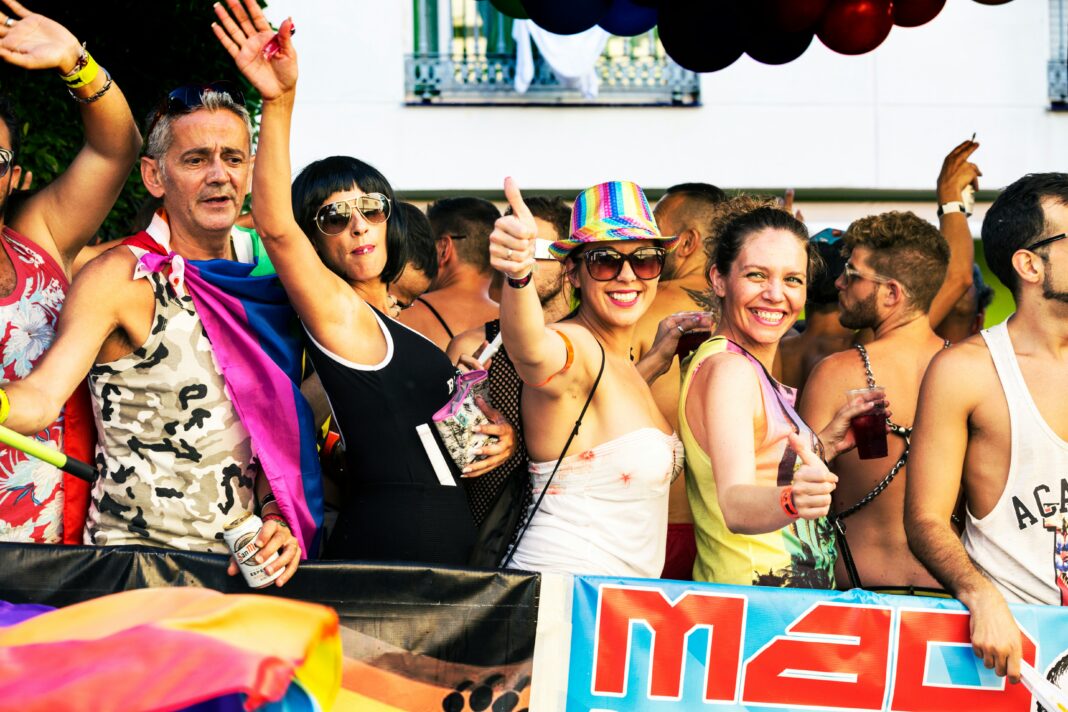
Meanwhile, the beach resort town of Torremolinos, less than a 30-minute drive or train ride from Málaga, becomes a hub of sweaty homosexual dancing, cruising and sunbathing every summer, especially during Pride (May 26 to June 6, 2026). Torremolinos, which has a population of about 75,000, is in the running with Maspalomas and Sitges for the title of Spain’s wildest gay party town. It’s the gayest place on the Costa del Sol and functions something like Málaga’s gay village. In fact, this former fishing village is where Spain’s queer rights movement bloomed in the 1960s, developing an underground gay scene during Franco’s dictatorship. La Nogalera, a pedestrian zone and shopping complex near the Torremolinos train station, is the nucleus of the city’s queer scene, packed with bars that cater to every age, body type and gender. Even the most introverted of visitors are likely to make a new friend while walking around the bustling strip. Smart LGBTQ+ visitors get a hotel in Torremolinos, then make day trips to visit the cultural attractions of Málaga.
Further inland, the much-visited city of Granada, full of cultural and architectural juxtapositions, harbours more subdued forms of queer expression. The flamenco here is more raw, intuitive and unrehearsed than elsewhere in Spain. Granada, which has a population of 233,000, has a younger, crunchier vibe than its Andalusian sisters. Bars like Six Colours (see our listings below) welcome all species of queers to their drag shows and feminist cabaret performances. There’s an undercurrent of activism in Granada, as well, with the Granada Visible organization spearheading the region’s local queer rights (and anticapitalist) movement. Yes, there are also more “Tourists Go Home” signs here protesting gentrification, but those shouldn’t deter visitors. Even the most touristy areas of Granada have conserved a spirit of community. Each night at the San Nicolás lookout, both tourists and locals alike watch the sky blush pink against the Sierra Nevada. In the Sacromonte neighbourhood, a Romani enclave, flamenco dancers furiously stomp past tourists inside old caves carved out of hills. The famous Moorish palace La Alhambra (C. Real de la Alhambra s/n, Centro, Granada) presides over it all, maintaining its centuries-long conversation with the cobblestoned Albaicín neighbourhood that faces it from across the ravine.
Córdoba, which has a population of 325,000, is noticeably quieter than its three siblings, Seville, Granada and Málaga. Teeming with Moorish treasures, it’s a city of courtyards and shadows, of jasmine and orange blossom scents floating across the air. Yet there’s still a queer community with film screenings, meetups and safe spaces. San Basilio neighbourhood, where flower-filled patios sprout on every corner, is a perfect place to sip fino sherry. The ancient, stony Judería is the best for wandering aimlessly with a lover. In the spring, locals even open their splendidly decorated patios to the public for photo ops, epitomizing Andalusian hospitality.
Each of these cities has its preferred dishes. In Málaga and Torremolinos, sardines are skewered and grilled over open fires, releasing a smoky fragrance that permeates the beaches. In Córdoba, salmorejo reigns as the rich and velvety cousin of gazpacho. Served chilled and topped with ham, it’s the ideal companion for those fino sessions in San Basilio. Granada prides itself on its fried eggplant with sugar cane honey, a nod to the region’s Moorish past. Of course, throughout all of these cities and especially in Seville, tapas dominate the local cuisine: garlicky prawns, spicy fried potatoes, Iberian ham. With every meal comes a generous helping of tinto de verano, Andalusia’s lighter variation on sangria.
Outside of the cities, road trips lead to numerous natural wonders. The Caminito del Rey hiking trail snakes between Ardales and El Chorro, a spectacular region comparable to Zion National Park. In Paraje Natural Torcal de Antequera, jagged rock columns burst from the ground like ancient guardians of the eagles and goats that call them home. Meanwhile, the nearby Tabernas, near the town of the same name, is Europe’s only desert, its beauty coming alive at twilight. If pressed for time, any short hike in the Sierra Nevada range has magnificent views.
That’s not to dilute the cultural richness of the cities. Centre Pompidou Málaga (Pje. del Dr. Carrillo Casaux s/n, Distrito Centro, Málaga), an offshoot of the Parisian art centre, is a kaleidoscopic glass marvel. Museo Picasso Málaga (Palacio de Buenavista, C. San Agustín 8, Distrito Centro, Málaga) opened in 2003, 50 years after Pablo Picasso declared he wanted his work to have a place in the city of his birth. Both represent the city’s decades-long transformation. In Granada, the human-made caves of Sacromonte are as culturally significant as the sprawling Alhambra palace and its efflorescent gardens. In Córdoba, the central Mezquita-Catedral (C. Cardenal Herrero 1, Centro, Córdoba) remains one of the most impressive Moorish constructions in Europe, despite having been converted into a Roman Catholic cathedral in 1236. Its candy cane-patterned arches recall a fantasy universe. In Seville, the Plaza de España attracts influencers and normies alike to its intricately designed mosaic alcoves alongside Canal de Alfonso XIII.
Through it all, the Andalusians themselves are perhaps the best attractions. A typical Andalusian may be a study in contrasts—fiery yet gentle, coquettish yet sincere, slow-talking yet fast-moving—but they’re unified by one central concept: duende. It doesn’t have an exact translation, but it’s what every visitor in Andalusia must embrace in order to truly experience the region. It’s a kind of heightened, soulful passion that Andalusians call upon whether they’re celebrating successes or mourning losses. It’s what drives flamenco. It’s what makes Andalusians’ joy so infectious, and it’s what makes them such great flirts. Here is a cheat sheet to the best of LGBTQ+ Andalusia.
What to see and do in Seville
For more extensive listings on Seville, check out our insider’s guide to the best of LGBTQ+ Seville.
Royal Alcázar (Casco Antiguo, Seville). This historic palace has been occupied by everyone from Islamic rulers to the Spanish royal family. Most recently, its extensive gardens and singularly tiled walls appeared on Game of Thrones, subbing in for Dorne. It’s better to reserve a ticket for the morning, before the crowds arrive.
Plaza de España (Av. Isabel la Católica, Sevilla). This massive, colourful plaza is lined with alcoves that represent the different regions of Spain through bold tilework and artisanal benches. Visitors love to rent boats and float down the canals.
Where to stay in Seville
Halo Boutique Hotel Sevilla (C. Gloria 3, Casco Antiguo, Seville). This adults-only, centrally-located hotel in an old stucco 19th-century building is designed throughout with a summer colour palate. Its pool and terrace are particularly enticing.
Where to eat in Seville
La Casa del Tigre (C. Amparo 9, Local B, Casco Antiguo, Seville). There are few tapas bars in Seville that are as sophisticated as The Tiger House, where patatas bravas, salmon-covered brioches and pork tacos are all the rage.
Bar Casa Ruperto (Av. Santa Cecilia 2, Triana, Seville). A local favourite, this tapas bar is a bit out of the way, across the canal, though it’s worth the trip for its famous fried quail.
Where to party in Seville
PRIDE B4R (C. Trajano 38, Entrada por Delgado 1, Casco Antiguo, Seville). Formerly called Men to Men, this 365-day-a-year drag bar packs a lot of queers into its two floors while maintaining a laid-back vibe that makes everyone feel welcome, from bears to trans folks.
ITACA (C. Amor de Dios 31, Casco Antiguo, Seville). The city’s most popular gay club vacillates between a smoky cruising bar and a typical pop-infused dance club. It depends on the night. Saturdays are always busy, and the darkroom rarely lets people down.
Where gay and bi guys can find fun in Seville
Bar El Bunker (C. Torrijiano 2, Macarena, Seville). Come to this men-only cruising bar for the Naked Nights. Stay for the debauchery. No pants, no problem.
Where to shop in Seville
La Importadora (C. Pérez Galdós 2, Casco Antiguo, Seville). This spacious central boutique has art and vintage clothing in equal supply.
What to see and do in Málaga
Alcazaba (C/ Alcazabilla 2, Distrito Centro, Málaga). This Moorish fortress-palace complex, which overlooks Málaga’s port, has been around since the 11th century. Its courtyards still burst into hibiscus blooms and horseshoe arches still guard its doorways, evoking Málaga’s stately Muslim past.
Castillo de Gibralfaro (Cam. Gibralfaro 11, Distrito Centro, Málaga). Though a bit less intact than Alcazaba, this relatively younger Moorish castle (mostly built in the 14th century) is still a choice spot for watching the sunset.
Where to eat in Málaga
Kaleja (C. Marquesa de Moya 9, Distrito Centro, Málaga). If there’s one restaurant that all foodies visiting Málaga and Torremolinos must try, it’s Kaleja. The physical space itself appears ominous thanks to its onyx and ash grey-coloured décor, but that’s just a nod to Kaleja’s signature style of cooking. All of the handpicked regional ingredients are slow cooked over a smoky wood fire.
Where to party in Málaga
Kipfer & Lover (C. San Juan de Letrán 21, Distrito Centro, Málaga). The party scene in Málaga is chiller compared to nearby Torremolinos, but the locals are just as friendly. Kipfer & Lover, a queer-owned meeting place for the LGBTQ+ community and others, is the hub of the action. The bar stages regular themed nights.
What to see and do in Granada
Alhambra (C. Real de la Alhambra s/n, Centro, Granada). This medieval Moorish palace complex is one of the most visited fortresses in the world thanks to its dramatic hilltop location and astonishing interior. Every room seems to have a wall covered by fabulously intricate stonework. It’s best seen with a tour guide; there are no official tours, but visitors can reserve a licensed independent tour like this one in advance.
Cuevas Los Tarantos (Cam. del Sacromonte 9, Albaicín, Granada). It’s hard to pick just one flamenco show in Granada. La Alborea has the most popular and elaborate one in the city, but we have to give the edge to Cuevas Los Tarantos. This intimate and captivating spectacle takes place in the chilly human-made caves where the Romani of Granada first developed flamenco some 300 years ago.
Where to stay in Granada
Gar Anat Hotel (C. Placeta Peregrinos 1, Centro, Granada). Like so many buildings in this city, Gar Anat once belonged to the city’s Muslim ruling class. It was later redecorated by Christians and converted into a hospital before becoming the dignified boutique hotel that it is today. The bookstore is especially lovely.
Where to eat in Granada
Perromedio Taberna (C. Marqués de Gerona 17, Centro, Granada). This tapas restaurant may be small, but it’s mighty. The Iberian ham plates, cheese boards and sangria all deserve top marks; however, the ingredients here are local and authentic, so it’s hard to go wrong with anything on the menu.
Where to party in Granada
Eclipse Bar (Pl. de los Lobos 9, Centro, Granada). The loud music and flashing lights of Granada’s most popular queer club provide a contrast to the staid stupour of the city in the summer. Its underground location also lends it an air of foreboding.
Six Colours (C. Tendillas de Sta. Paula 6, Centro, Granada). Helpfully not too far from Eclipse, Six Colours pairs ostentatious décor with upbeat pop music and delicious cocktails. The crowd is a bit more diverse than Eclipse’s.
Where gay and bi men can find fun in Granada
Septimocielo (Basement, C. Duquesa 3, Centro, Granada). Granada is not known for its gay saunas, but this comfy cruising bar is quite appreciated by locals for its open-minded clientele and naked nights.
Where to shop in Granada
Oh Oh July Vintage (C. Trinidad 5, Centro, Granada). Crowded with excellent vintage finds for all genders, Oh Oh July Vintage has plenty to offer adventurous style hunters.
What to see and do in Córdoba
Mezquita-Catedral (C. Cardenal Herrero 1, Centro, Córdoba). Córdoba’s star architectural attraction is a study in contradictions: It started as a mosque and grew into a cathedral, but it’s located in the city’s Jewish quarter. Its onyx, jasper, marble and granite columns, as well as its famous striped arches, unite everyone in appreciating their beauty.
Where to stay in Córdoba
H10 Palacio Colomera (Pl. de las Tendillas 3, Centro, Córdoba). This regal hotel combines grandeur with personalized service—the pool is especially delectable. As a former count’s palace, it features voluminous rooms and terrific views.
Where to eat in Córdoba
La Boca (C. de San Fernando 39, Centro, Córdoba). Handily located near the Mezquita-Catedral, La Boca is lined with eclectic decorations from all over the world. It’s also got a verdant garden terrace. The food is just as diverse, with excellent offerings ranging from Mediterranean to East Asian.
Where to party in Córdoba
Glam Vial (C. Miguel Gila, Noroeste, Córdoba). Córdoba’s number one queer bar is a hotspot of drag and dancing in this otherwise reserved city. Decorated primarily with colours and variegated lamps that resemble origami, Glam packs a lot of fun onto its dancefloor and performance stage.
Sojo Ribera (P.º de la Ribera 1, Centro, Córdoba). Decked out with shimmering disco balls and decorative flourishes inspired by the natural world, Sojo is the queerest-looking bar in Córdoba that isn’t officially queer. However, it’s queer friendly; many same-gender couples love the various flamboyantly themed rooms.
What to see and do in Torremolinos (aside from the beach)
Casa de Los Navajas (C. Antonio Navajas Ruiz, Bajondillo, Torremolinos).This century-old palace serves up all the Moorish realness of Málaga, but in the Revival style of the 20th century, trading monochromatic stone for colourful tilework and arresting furnishings. The exterior staircase has made the rounds on Instagram.
Where to stay in Torremolinos
Meliá Costa del Sol (P. de Maritimo Torremolinos 11, Torremolinos). This upscale offering from one of Spain’s largest hotel companies is a hit among queer visitors thanks to its spacious bar, outdoor pool, excellent Andalusian restaurant, gym and spa complete with Turkish steam bath. Oh, and each of its 500+ rooms has a private terrace.
Hotel Ritual Torremolinos (C. Brasil 2, Torremolinos, Málaga). As the largest adults-only gay hotel in Southern Europe, Hotel Ritual’s reputation precedes it. It’s a fun, flirty place for a super gay holiday. Its buzzy pool area, popular drag bar, rooftop nudist space and full-service spa mean that guests rarely leave the complex.
Where to eat in Torremolinos
Restaurante El Dorado (C. del Peligro 2, Torremolinos). Andalusian seafood is among the best in the world, and this restaurant doesn’t disappoint. El Dorado’s grilled octopus and garlic prawns pair perfectly with the sweeping views from its balcony.
La Gamba Alegre (Plaza Gamba Alegre 14, Torremolinos). For no-frills authentic tapas, La Gamba is the place to be. As a bonus, each drink comes accompanied by a different free tapa.
Where to party in Torremolinos
Eden Beach Club (P. de Maritimo Torremolinos, 1K, Nogalera, Torremolinos). We could easily list this hotspot in Where to Eat; the restaurant serves lunch and dinner, as well as cocktails from start to close. But this is also perhaps the nucleus of all queer beach life in Torremolinos, and it’s certainly the liveliest beach club in the Nogalera gaybourhood. On summer nights, it turns into a club. It’s got the hottest male bar staff, but that’s of course subject to opinion. (They are. They’re the hottest.)
Chessa (C. Danza Invisible, Nogalera, Torremolinos). Nogalera has no shortage of smaller bars, but Chessa caters specifically to an older and bearier crowd, cultivating a chilled vibe next to its wilder peers. The staff is famously friendly.
Men’s Bar (C. Danza Invisible 4, Local 713-714, Nogalera, Torremolinos). Whereas Chessa is bearier, Men’s is hairier. Its vivacious terrace fills with otters and cubs, especially on leather nights or when Men’s hosts special DJs and drag performers. Depending on what event it’s hosting, Men’s can be one of Torremolinos’s busiest bars.
Centuryon Club (C. Casablanca 15, Nogalera, Torremolinos). Torremolinos’s largest gay club, the biggest in the Costa del Sol, plays hostess to any large event or circuit party that sweeps through the city. House music is de rigueur. The crowd is refreshingly diverse in terms of age, gender and body type.
Discoteca Parthenon (C. de la Nogalera 715/716, Nogalera, Torremolinos). This vast, well-lit gay club opened in 1985—they must be doing something right. It’s got the crowds and crowd-pleasing music Costa del Sol partiers are looking for, but it’s possible to escape to the quieter bar sections or darkroom for a sonic vacation.
Where gay and bi men can find fun in Torremolinos
Apolo Sauna Torremolinos (Edificio Ole II, Av. Carlota Alessandri 105, Torremolinos). Located just south of the Torremolinos city centre, around Playa de la Carihuela, but it’s worth the trip. The roomy venue is home to a Finnish sauna, showroom, labyrinth, darkroom, glory hole cabins, bondage area, showroom, pub and video room. On weekends, the upstairs morphs into a DJ’d afterparty.
Exxxtreme Cruising Club (C. Skal, 2, next to Cupido Sexshop, Nogalera, Torremolinos). Despite being Torremolinos’s most popular cruising club, this sheeny, sultry venue is roomy enough to never feel crowded. For those seeking a bit of intimacy, there are private cabins. But then again, not everybody is shy. The place is known for groups of content creators using it as a backdrop to show off, uh, their content creation skills.
Where to shop in Torremolinos
BOXER (C. Danza Invisible 7, Local 3, Nogalera, Torremolinos). BOXER gets high marks for its Pride tank tops, fetish apparel, sports apparel, toys and underwear. On top of that, the Barcelona-based chain’s Torremolinos location earns praise for its personable staff.