We travel to lose ourselves. We chase horizons to escape the mundane, to find anonymity in foreign crowds and to rest.
But for trans people, the luxury of “switching off” is becoming an increasingly rare commodity. The very act of movement—crossing borders, navigating security, checking in to a hotel—requires a heightened state of hyper-vigilance. The world is vast, but depending on who you are, the map of where you can safely exist is being redrawn every day.
Pre-transition, when I navigated and appeared to the world as a woman, travel was relatively simple. Presenting as a butch lesbian drew stares, occasional jealousy if I had a pretty girl on my arm, and some rare but upsetting instances of threat and violence. But travel? Travel was easy.
Now, however, travelling the world as a trans man married to a trans woman can be near impossible, and we have had to learn to plan and prepare with almost military precision.
The U.K.’s trans community has had a tumultuous few years. As a born and bred Londoner, I have witnessed the pendulum swing wildly in my lifetime. Growing up in the late 1980s and ’90s, under the lasting shadow of former prime minister Margaret Thatcher’s vociferously anti-LGBTQ+ conservative administration, I didn’t meet another trans person until my late teens. Transitioning in my mid-twenties, I finally discovered the vast spectrum of gender fluidity and identity spread out across the world. The Two-Spirit Indigenous peoples of the Americas, the Hijra of India, the Rae-rae of Tahiti. We are everywhere and always have been. Sadly though, our tourist spend is not always so welcome, and determining where is safe and inclusive can be tricky.
The U.S. has always been a firm favourite destination of mine. New York, with its vibrancy, bright lights and overt queerness, is where I first holidayed with my wife, Hannah. I proposed on the Lake in Central Park, in a leaky little rowboat. We honeymooned there a year later. As a director, I have since toured my films in Florida, Indiana, Texas and many more states with little issue. Now, however, the United States’s rapidly evolving political climate serves as a powerful deterrent to large swathes of LGBTQ+ travellers, my wife included.
In 2025, there were 701 anti-trans bills making their way through US legislative bodies, many of those aimed at restricting trans travel. From declaring “X” gender markers on documents to be invalid, to ordering that trans people amend travel documents to match their birth sex, to worrying tales of trans people being detained and refused entry, their visas and passports removed or destroyed, the U.S. now feels a lot less appealing for trans travellers, sadly.
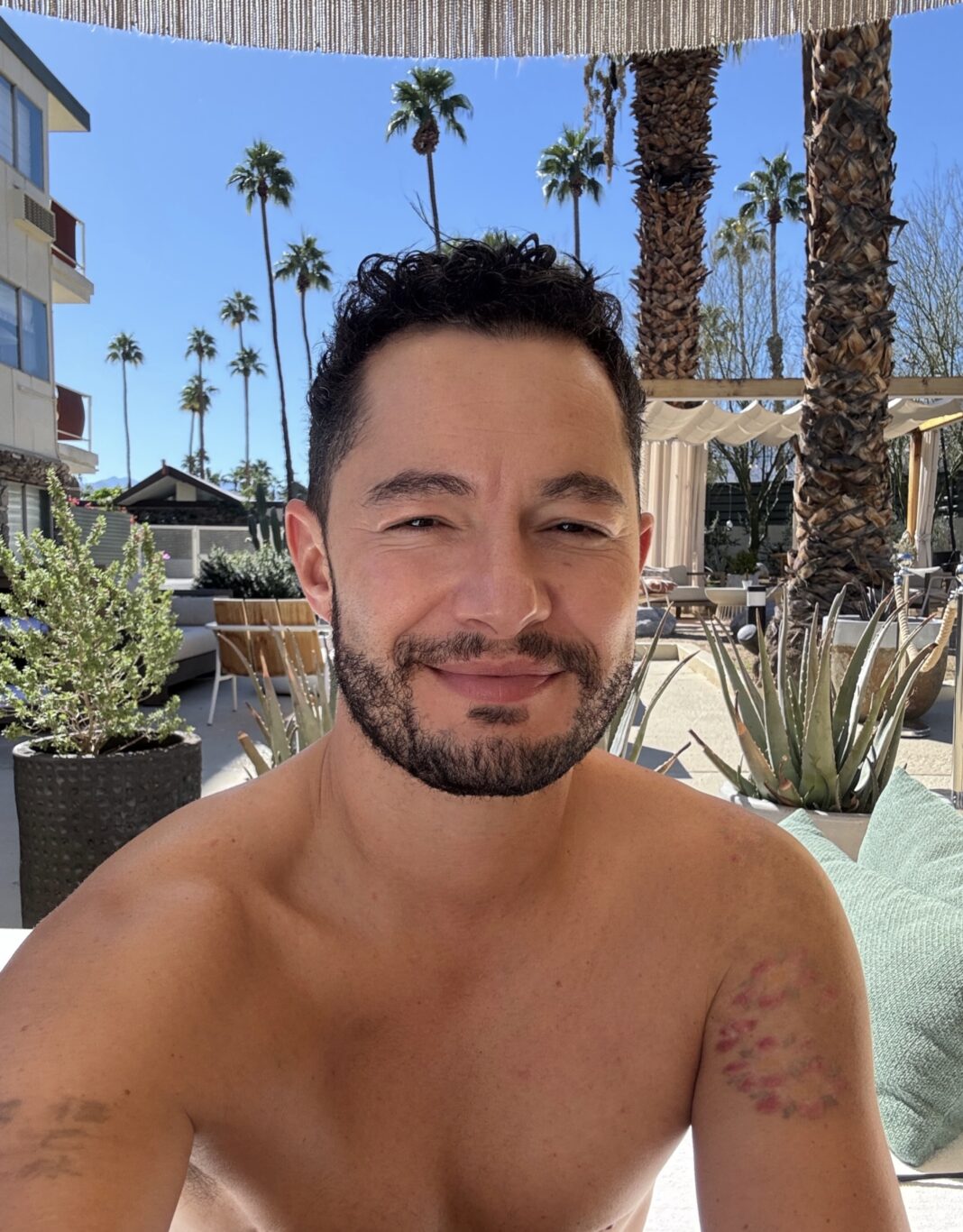
Despite that, I recently made a trip to Palm Springs, California, the famously iconic desert oasis. Usually I would have been wildly excited for an adventure like this. This time, as I looked at departure airports and connections, all I felt was anxiety. Would London to Dallas be safe, given Texas’s reputation as an anti-trans state? Would customs even let me in? After much deliberation and advice, I flew first to Dublin, to navigate American Transportation Security Administration (TSA) pre-clearance on “trans friendly” Irish soil. (Ireland is one of six countries where international passengers can clear U.S. security before getting on the plane, rather than on arrival, so if there is a problem, the passenger can withdraw their request to enter the United States and, in most cases, just leave the airport without detention or other issues.) From Dublin I flew to San Francisco, California, then finally to Palm Springs.
As it happens, the TSA agent who interviewed me in Dublin was friendly and professional, only asking, “Where and for how long?” But my nerves ran high for both legs of my journey.
When I compare stories with trans friends, the anxiety and risk appears to be much more prevalent for trans women and nonbinary folk than for trans men, but there are universal issues that make our travel harder. I always dread security at airports, fully aware that the body scanner gives me away every time, the screen’s large yellow box flashing over my groin area, loudly flagging my “irregular” body contour. This fuels anxiety for most trans travellers, coupled with the worry of the hormone medication in my luggage being discovered and confiscated, potentially leading to more invasive body searches.
For “non-passing” trans people, there are myriad anxiety-inducing moments: travelling through trans-hostile airports or countries; passports that don’t match the individual’s gender presentation; a potentially fraught drive from the airport with an uneducated driver; and awkward check-ins with uninformed staff. For some trans people, the easiest option is simply not to travel, which makes the world feel very small.
My wife, Hannah, our two kids and I travel widely, both for work and pleasure. But we are careful about where we go, researching the politics and culture of a country before embarking. Malta is a safe bet, consistently ranked first in the ILGA-Europe Rainbow Index, and a firm family favourite. Spain is also one of the safest European countries for LGBTQ+ travel and our regular summer vacation spot. We’ve visited Italy without issue, most likely as we present in a hetero-normative manner. The same is true of France, Ireland, Switzerland, Portugal and Canada. Recent trips to Morocco and Ukraine (before the 2022 Russian invasion) both made us nervous. Hannah’s voice is deep and can draw attention; we have had to leave bars or restaurants in those countries, where hostile stares and whispers made us feel unsafe.
A lack of understanding of trans people can lead to clumsy mistakes, rather than an intentional offence. But the end result is often the same. Hannah was a captain in the British Army for more than a decade and her voice was an important tool for commanding respect. As such, she didn’t go through any of the years of voice training that many trans women do to better “assimilate,” and she has a beautiful but very deep voice. Without fail, in every single call that Hannah has ever made to book a flight or a car, make a room service request or even to ask for something in person, she is mistakenly referred to as “sir” or “Mr. Graf,” even when she has identified herself as “Hannah.” By now she is used to it, and is seasoned enough not to take offence unless it seems intentional. But it’s certainly very wearing when, sitting in a smart New York hotel restaurant, the waiter clumsily calls her “sir.” The flustered apology often makes it worse.
Of course, we’ve had many joyful and heartening occasions while travelling as openly trans people. There was the time that we stumbled into Brother Jimmy’s, a now-defunct barbecue restaurant in New York. At the time, the busy blue collar sports bar was reviewed as the best barbecue in Manhattan. We had noticed on Google that it was listed as LGBTQ+ inclusive, but the inclusive vibe wasn’t immediately evident as we walked through the heavy doors. Sitting at a corner table, debating whether we should leave, the waitress came over and took our order, Hannah keeping her voice down so as not to draw attention. The waitress smiled kindly and said, “I hope it’s okay, but could I ask your preferred pronouns?” Instantly, we relaxed, knowing that the culture there was indeed one of inclusion and understanding. Such a small gesture, but one that meant so much.
There was also the time we stayed at the Beverly Hills Hotel in Beverly Hills, California. One day we posted photos of us by their stunning, Olympic-sized pool, tagging the hotel on social media. The next day we returned to our room after dinner to find that they had printed our photos onto little white chocolates and left them by the bed. Not only that, they had researched and discovered that it happened to be International Transgender Day of Visibility and had printed some chocolates with a little trans flag and “Happy Trans Awareness Day.” Even for a luxurious hotel under the Dorchester Collection brand, this felt above and beyond. (Owned by the Sultan of Brunei, the Dorchester Collection brand has wrestled with controversy and boycotts in the past over the country’s anti-LGBTQ+ policies; the brand also provides trans inclusion training at all of their European hotels, donates space to LGBTQ+ charities and sponsors LGBTQ+ events.)
Of course, not every gesture has to be so grandiose to make an impact. Last year we went to Ultima Collection’s Courchevel property in the French Alps, where every staff member, without exception, called Hannah “Madame” and “Mrs. Graf.” Not a single awkward slip. The profound effect it had was immeasurable, and the stunning scenery and high-end luxury of the hotel came a close second.
We have experienced a mixed bag of reactions and attitudes but have remained largely unscathed, most likely because of our presentation as a hetero-normative couple. Many of our friends and acquaintances have not been so lucky.
Someone’s clothing, hair or voice should not impact their safety and comfort as a world traveller. The trans community lags behind the wider lesbian, gay and bisexual community in terms of understanding and empathy, but there are now more of us than ever. We are more visible, more affluent and more eager to explore the world. While some brands and countries are openly and unashamedly unwelcoming, those that remain proudly and visibly trans inclusive will be remembered long after those experiences.
Ultimately, travel is an act of visibility. Every time we step onto a plane, walk into a restaurant in a new city, or hold hands on a foreign street, we are refusing to let the world shrink around us. The logistics may be tougher now, and the map may require more careful navigation, but the destination—a life lived openly and without borders—is always worth the journey.