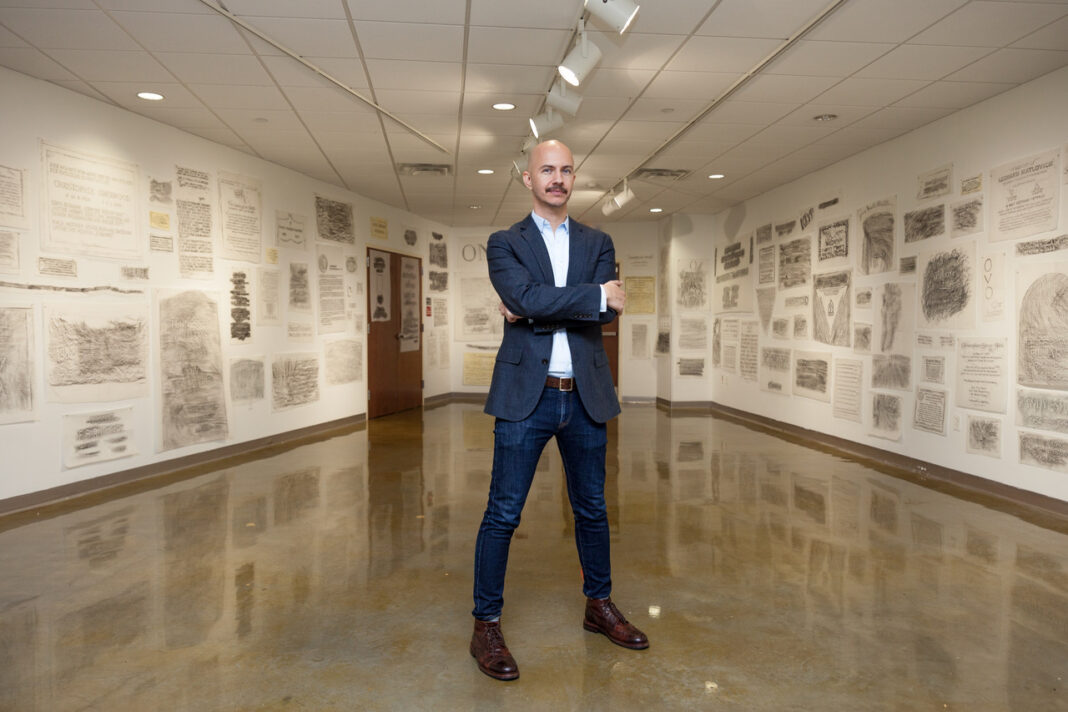
Steven Reigns is best known as a poet and educator, and was appointed the first Poet Laureate of West Hollywood. But around 2011 he came up with an idea that also makes him a queer history hunter.
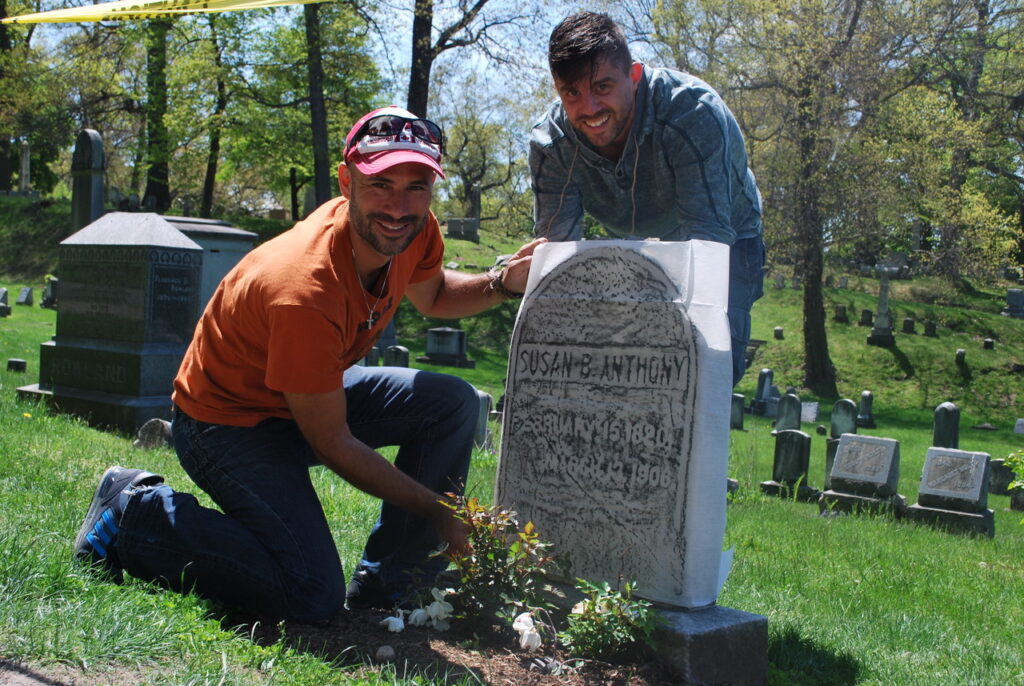
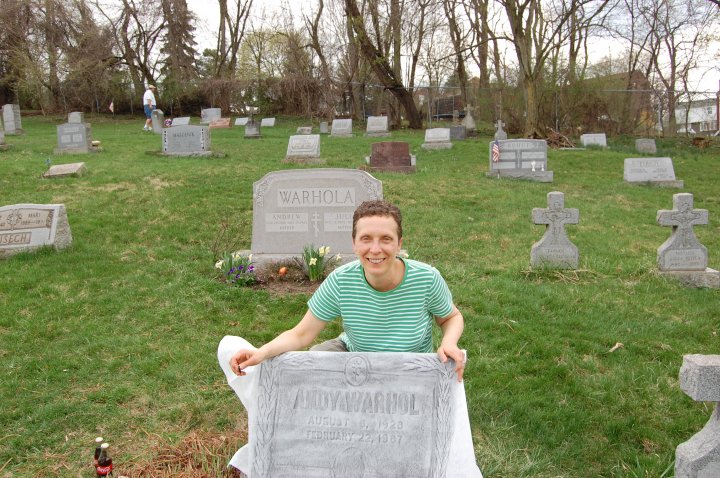
Reign travels around the world using a crayon and fabric to rub historical markers, signs, tombstones, cenotaphs, plaques and monuments that recognize LGBTQ2S+ history and historical figures. He also provides guidelines for others to do the same in different parts of the globe as he builds up a collection of rubbings he’s dubbed The Gay Rub. The name is a play on sexual activity, “rubbing someone the wrong way” and pointing out the truth with the phrase “That’s the rub.”
When the rubbings are not on exhibition, Reigns keeps them stored flat in a secure storage facility. No showing is currently scheduled (watch the website for updates), but of course, travellers can go see some of the markers IRL for themselves. Pink Ticket Travel asked Reigns about the project and the lengths he’ll go to, to get a rubbing.
Where did the idea for The Gay Rub come from?
I was living in West Hollywood at the time, and I discovered that a marker close to my house, dedicated to transgender victims of hate crimes, was the first of its kind in the world. I thought, wow, if this is the first, how many others are there? It got me thinking about public commemorative markers. It was a flash of an idea: What if I collected rubbings of them and showed them all at once?
Why rubbings? Why not, say, photos of these markers?
Rubbings are so tactile. I also loved the idea of a room just filled with black and white markers. There’s a haunting quality to a rubbing. It also requires interaction, which is very different from a photo.
It’s a good idea, but I would have never thought of it. Was rubbing something you did as a hobby before the project?
No, absolutely not. The last time I had done a rubbing was probably in elementary school, when we used to do rubbings of oak leaves. A big part of the project was figuring out the material parameters, choosing the right ones and sticking to them. I tried lots of different papers. Eventually, I landed on a fabric known as tearaway fabric, which people use with embroidery. Fabric is easier to use because it doesn’t get damaged by water. It also doesn’t crease the way paper does. I tried charcoal initially, but it transfers to other documents and doesn’t stay clear. So all the rubbings are done with crayon.
How do you decide which gravestones, plaques, signs and other markers deserve to be rubbed and so captured by the project?
They need to be notable in some way, and have made a mark of some kind on the culture. A lot of us have queer relatives living quiet lives, and those lives are important as well. But this is a project devoted to notable LGBTQ2S+ people. I get email suggestions, or friends suggesting, so it’s an ongoing list. On the website there’s a tab where I get suggestions and make requests for others to do rubbings.
Since I don’t curate the markers themselves, it’s interesting who gets erased and who gets acknowledged. There are very few Black women in the collection. Conversely, people love to dedicate a plaque to a politician, so there are lots of plaques for Harvey Milk. There are also lots of plaques for Tennessee Williams and for Oscar Wilde.
How many have you yourself done?
Hundreds. Every time I travel, I bring rubbing supplies. I research what’s nearby and make excursions specifically to get rubbings.
What’s the farthest you’ve travelled to get a rubbing?
The rubbings are from all over the world. I’ve done lots of rubbings in London and Paris. It’s a way of exploring a city and having an adventure. Some people visiting London might want to go to a well-known store, but I’d rather seek out a marker for a queer person of note.
What’s a place you’ve been to that you wouldn’t have visited otherwise except to get a rubbing?
Countless cemeteries. I’ve really learned about grief and the different ways that people grieve. I’ve seen people bring their morning newspaper to read at the gravesite of someone they love. I’ve seen someone pour a beer out onto a grave. I’ve even seen families barbecuing in a cemetery.
One of the hardest rubbings to get was James Whale, who directed Frankenstein, Bride of Frankenstein and The Invisible Man. He’s at the Forest Lawn Memorial Park in Los Angeles. It’s basically a gated community for the dead. I tried twice and they wouldn’t let me in. I didn’t understand why it was so hard until I did some research and found out it’s the same place where Michael Jackson is buried. They had a guard walking around every 11 minutes or something like that. I stuffed rubbing supplies in my shirt and lived out my 007 fantasy to get James Whale.
Franklin Pangborn is also buried at Forest Lawn. I remember not wanting to do his rubbing. He was an actor in old Hollywood who always played fey—you know, a waiter or a hotel clerk. A man whose career was built on the strengthening of stereotypes of gay men. When I went to do his rubbing, I really softened on him and realized what it must have been like to have his life be the butt of all those jokes. That was his way of surviving.
Have you ever been interrupted during a rubbing? Maybe somebody thought you were a vandal?
Just last year I was outside Amsterdam doing a rubbing of these large letters: Sodomites. While I was doing it, a woman with young kids offered to help. The fabric was blowing in the wind, and I was there by myself trying to do this. It was really touching to have this woman stop. I thought, Maybe she doesn’t realize what I’m rubbing. But she knew exactly what it was, and we had a conversation about that place and that marker. She had pointed it out to her boys before. I’ve experienced nothing but helpfulness and generosity. People are very curious about the process and what it’s going to be used for. Fortunately, rubbings do not harm markers.
Your project allows people to see these names, dates and the rest of the information on the markers in one place, when the rubbings are on display. But it’s also a kind of database of places that travellers can visit to see for themselves.
I hope so. Obviously when people visit Paris, some will visit the graves of Proust and Oscar Wilde in Père Lachaise Cemetery. But it’s not just about grave markers. Markers can denote where someone lived or where an important event in history took place. I think that’s a very powerful experience, to be in a place where queer history took place.
Who is still on your wish list?
There’s a marker for the poet and playwright Jean Cocteau in the south of France, a silhouette of his face. It would be wonderful to have in the collection because, with markers, there’s a lot of text. Markers that have a drawing or artwork are really quite beautiful and bold.
Steven Reign’s latest book, the memorial memoir Outliving Michael, released by Moontide Press, is out now.
This interview has been edited for length and clarity.