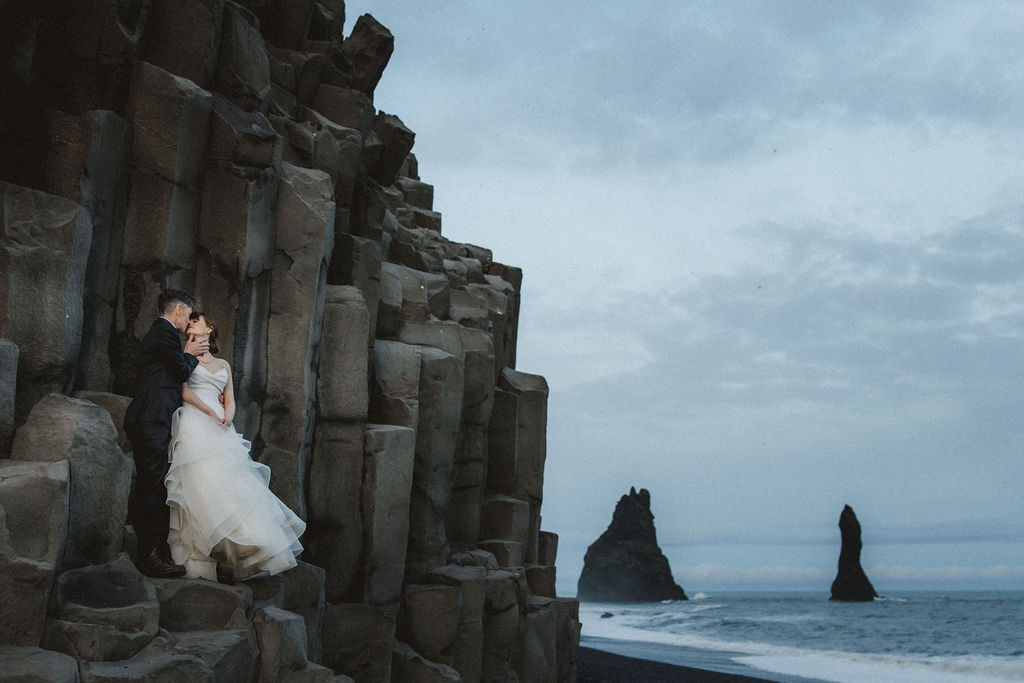
Louise Smith and Kim Drennan always knew Iceland was the place where they wanted to say, “I do.”
“We enjoy adventure, we love travelling,” says Smith, “and Iceland was our first vacation together. It really ticked all the boxes from a cultural and gay marriage perspective.”
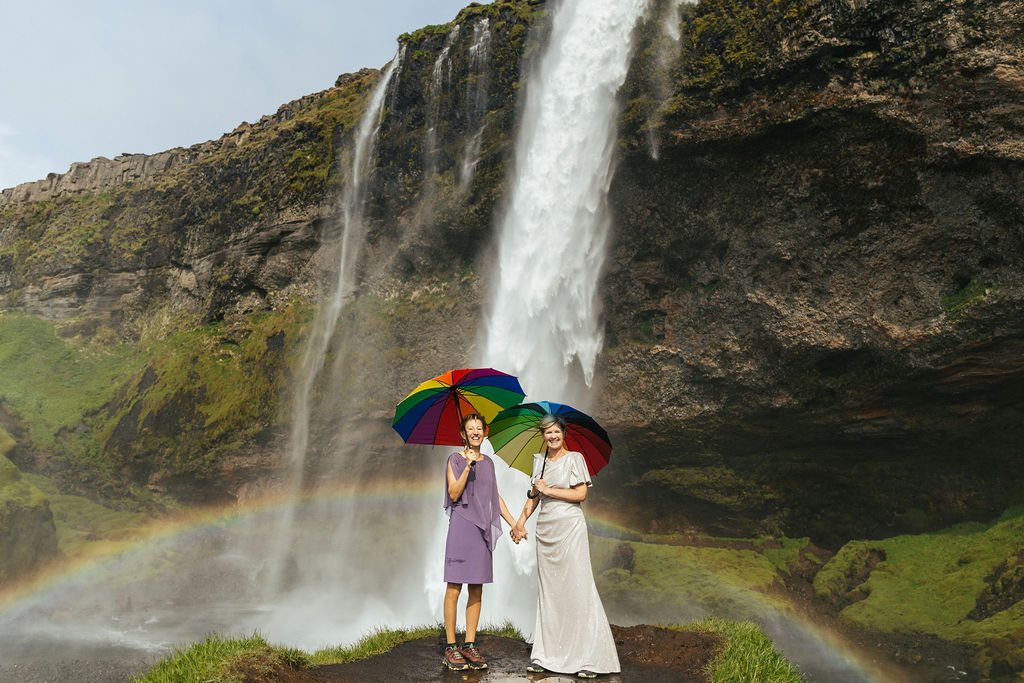
They’re not alone in feeling the magnetic pull of the land of fire and ice. Jen Stewart and Jan Schlaff from Michigan also chose Iceland for their big day, exchanging vows inside a cave not far from a waterfall. “We both really wanted to find a location that was private, but also where we could be outdoors and in a natural, beautiful spot,” says Stewart. “And Iceland is so gay-friendly—it did not disappoint. After our wedding, when we were taking pictures, everyone around us was congratulating us, people we didn’t even know.”
Since Iceland legalized same-sex marriage in 2010, adventurous queer couples have been making a beeline for this proudly progressive Nordic escape. While the country’s stellar LGBTQ+ rights are a major draw, the ease of access from North America and Europe, and the widespread use of English, along with the otherworldly landscape of waterfalls, black sand beaches, glaciers and bubbling hot springs, often help seal the nuptial deal while planning a queer destination wedding. When couples start Googling “same-sex wedding planners in Iceland,” the company Pink Iceland tops the list. It’s the company that helped Louise and Kim, and Jen and Jan, shape their ceremonies.
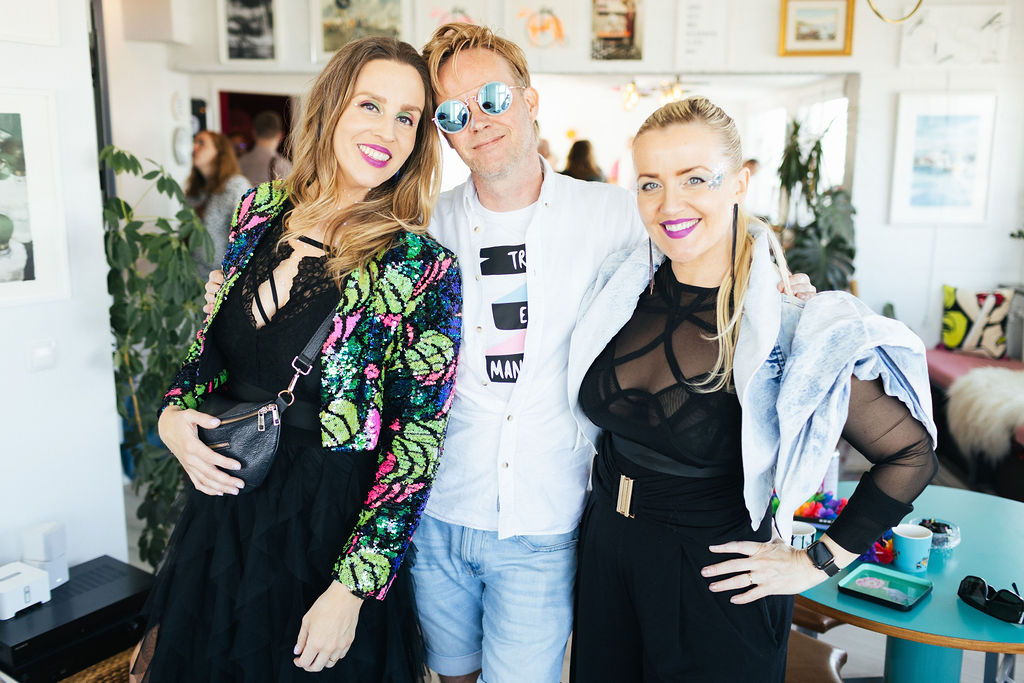
Launched in 2011, Pink Iceland is owned by married couple Birna Hrönn Björnsdóttir and Eva Maria Lange (who had their own destination wedding in Italy), and their friend Hannes Páll Pálsson.
“The dream was to create an environment where people could come to Iceland and travel freely and feel at ease,” says Lange. The company started as a queer tour operator with a sideline of weddings, but “we did not realize how big the wedding industry would be. The first year we thought we would have one or two destination weddings a year. We’ve now done more than 1,100 of them.” It’s the tour operator part of the business that’s become more of a sideline.
About 80 percent of the couples Pink Iceland marries are from the U.S., with the rest coming from Canada, Europe and parts of Asia such as Hong Kong and Taiwan. As the company’s reputation has grown, so has the number of straight couples asking to use their services. But the company stays true to its queer roots with a simple motto: to only work with nice people. They have a sign at their entrance saying don’t come in if you are racist, sexist or queerphobic. They have turned down clients who didn’t meet their standards.
The team plans indoor and outdoor weddings in every season (yes, even winter!), setting nuptials everywhere from the top of glaciers to volcanic craters and countless stunning spots in between. Weddings can be as small as just the couple to as big as several hundred people. While most weddings are planned six months to two years out, Þorarinsdottir Lange says that ceremonies can come together much more quickly.
“Icelanders, as a nation, are highly adaptable and very flexible. Couples don’t need to commit a year or two years ahead the way they do back home. We can make things happen within a week. We have a fantastic relationship with local authorities in terms of the paperwork and knowledge of locations across the country. While earlier is better for popular dates or vendors, waterfalls never sell out,” she says.
When thinking about a destination wedding, one question for any couple is whether to do the legal ceremony in the destination country or to do the legal ceremony in their home jurisdiction. Smith and Drennan opted for a pagan commitment ceremony in Iceland but were legally married over Zoom in their hometown of Boulder, Colorado.
“It felt like a better choice with the current state of things in the U.S., to have a legal marriage certificate in our home county,” said Smith.
Stewart and Schlaff, however, chose to be legally married abroad, as most Pink Iceland couples do. “Pink Iceland really were good about walking us through every step of the paperwork that we had to get, and then compiling all the documentation, so we ended up with an Icelandic marriage licence,” says Schlaff. That Icelandic licence—or the licence of any country where same-gender marriage is legal—is all that’s needed to prove they’re legally married back home in their home state.
These legal details are especially important for trans and nonbinary spouses. Iceland fully recognizes trans people and their identification documents. Couples can register as nonbinary (with “X” as their gender marker) on marriage paperwork. Those who choose this option should be confident that their home country will recognize marriage certificates with X markers.
The idea of doing a destination wedding may sound overwhelming. But working with seasoned professionals can make it much easier. We asked our couples and Pink Iceland for a list of considerations and advice for planning a destination wedding. Here’s a summary of their feedback.
- Choose the country/region/city that speaks to you. Do you want nature, urban or something else? Is it a queer-friendly place? Is same-gender marriage legal there?
- Do you want to have your legal wedding abroad or just a ceremony?
- If you’re trans or nonbinary, what reputation and legal protections does that destination have?
- Find a company that has experience with same-gender weddings, not just straight ones.
- If you want to honeymoon in the destination, consider working with a planner who can organize both the wedding and travels, for you and your guests if needed.
- Find out if the wedding planner takes care of filing all paperwork for you in the destination and provides you with the official, legal wedding documentation you need back home.
- If required, make sure your home country will accept a same-gender/nonbinary wedding certificate from a foreign country.
- Most couples want to create mementos of their marriage—it’s a wedding, after all. If you can, splurge for a local photographer who has worked with same-gender couples and knows the lay of the land to ensure beautiful memories from your day.