Even for gay travellers who have been there and done that all over the world, the Tokyo scene can overturn habits and expectations.
Don’t worry—I’m not trying to scare you. The Japanese capital, which has a metro population of more than 40 million, has something for everybody. It certainly has a gay scene that Western visitors would find familiar. The Ni-chōme neighbourhood of the district of Shinjuku has a classic gaybourhood. Walk from the top of Naka-dōri Avenue down to Gyoen National Garden and you’ll see rainbow flags, street-level bars, sex and underwear shops, posters for upcoming gay events, and drag queens coming and going from gigs, just like you’d see in any gay village around the globe. For example, at AiiRO CAFÉ (1F, Dai-7 Tenka Building, on Naka-dōri Ave., 2-18-1 Shinjuku City, Shinjuku, Tokyo), a visitor can spot the bar’s rainbow flags down the block, see how busy it is from the street, walk in with minimal scrutiny, order a drink at the stand-up bar, then enjoy the atmosphere provided by the DJ and the fellow customers, chatting, cruising or staying quiet as they see fit. Easy peasy.
But Tokyo has many scenes, including a gay bar culture that’s unique, somewhat mysterious and sometimes less welcoming to visitors. (I’ll get to the why of that “less welcoming” in a moment.)
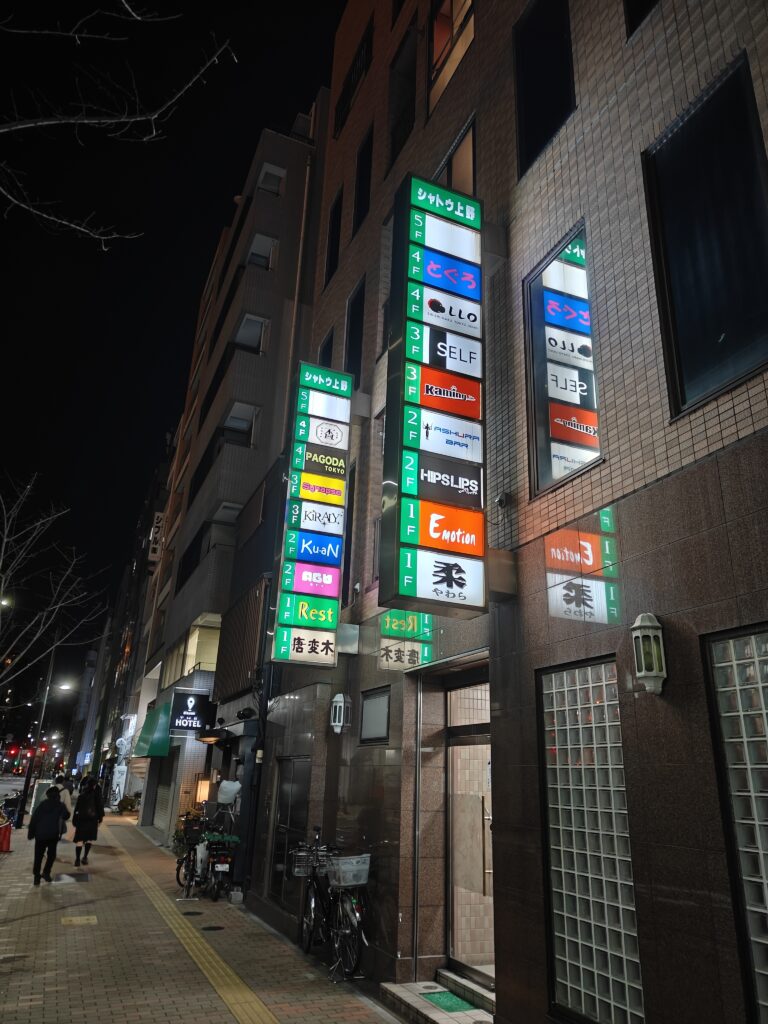
It’s said that Shinjuku has about 300 gay bars—the densest concentration of gay bars in the world—while the district of Shinbashi has about 50, Ueno-Asakusa about 45. Most of these bars are what are called “sunakku bā” or “snack bars.” You wouldn’t even know they’re there if you didn’t go looking for them. Some of them seat as few as five or six people; at the biggest you could pack in maybe 50 people shoulder to shoulder, for a frisky beer bust. Most of them are in the upper floors of various nondescript five-to-eight-storey buildings around Tokyo, as many as five bars per floor.
The history of these snack bars goes back to the Second World War, when Tokyo, especially Shinjuku, was in ruins and struggling economically. Land was subdivided into extremely small plots where entrepreneurs opened bars and snack counters in tiny shanties that could seat between five and 15 patrons. To get a sense of what Ni-chōme felt like back in the 1950s and ’60s, visitors can walk around the nearby Golden Gai, a mostly straight entertainment district, which is jammed full with around 280 tiny bars, some with room for only one or two patrons at a time, in ramshackle wooden buildings down narrow alleyways. The history in Golden Gai is preserved in the architecture. But in Ni-chōme, from the ’60s through the ’80s, these small buildings were gradually replaced by tall, narrow concrete towers, called Zakkyo Biru, where landlords would rent out the space to snack bar owners and other entrepreneurs (you can also find gay cruising clubs, called hattenbas, in these buildings).
So that explains how Japan got these living room–sized socializing spaces in “vertical villages.” But how did they come to be so integral to Tokyo gay life?
In the early 20th century, Ni-chōme was a straight red-light district. But following a 1958 ban on prostitution, the LGBTQ+ community started taking over spaces once occupied by sex workers. In the early days, these businesses were unassuming tea and coffee shops, but by the ’60s they had evolved into tiny LGBTQ+ bars, first discreetly, then more openly in the ’80s and onwards.
But not always completely openly.
The façades of these bar-filled buildings usually feature stacked signs listing the businesses inside, some in Japanese, many in English. Some of the English names may come off as gay-ish, like Bar Blacknude Hero (a gay bar), Diva (gay), Guyzuba (think “guys,” so gay) or Bar G-Pit (trans men), while other names don’t tip their hat very much, like Mark Land (gay), Diamondholic (lesbian) or The Onee Stars (mixed, gay welcoming). For a visitor, it can be hard to figure out what’s behind each name seen on the side of a building without going up the stairs or the elevator and stepping inside. If a newbie were handed a list of all of the Tokyo gay snack bars, how would they even pick one? It’s all very beguiling, perhaps even intimidating.
What makes it even trickier is that each of these bars tends to have a niche based on age, gender identity, sexual tastes, musical tastes, body type, socio-economic status, personal style, a combination of several factors…or just vibe. Sometimes that niche is clear and regulated—the demographics of the patrons, for example, may be stated on a sign at the door or on a bar’s website. But more often it’s more subtle and not clearly stated, based on aesthetics rather than a definable identity. Perhaps a patron who doesn’t fit in is rejected by a simple headshake upon entry. Unless they’ve been told about a snack bar by someone who’s spent time there, a visitor doesn’t know what to expect until they step inside, and even then they might need a few minutes or hours to get a sense of the crowd.
The niche, whatever it may be, is established by the proprietor, who is often the main bartender. The looks, sensibility, taste and business style of each owner-bartender, called “masters” or “mama-sans,” determines the client base. Typically the owner-bartender—in gay snack bars, he’s usually good looking, charming or both—is at the centre of the action. For contrast, imagine a couple of friends going to a gay bar in Europe or North America. Sure, they may sit at the bar, but if they want a quiet chat, they may pick seats away from the bar. In one of Shinjuku’s counter bars, though, patrons are almost always going to sit at the bar and interact with the bartender unless those seats are already occupied. It’s more like visiting someone in their home than going to a conventional bar.
Most of these counter bars charge a cover charge, anything from 1,000 yen (CA$8.65) to 3,000 (CA$26), which may include basic snacks, like cookies or crackers, or even fancier cooked dishes. Each bar’s drink selection, food selection and pricing system (all-you-can-drink, for example) may also be unique.
So to get back to that “welcoming” question. Yes, some bars have “no foreigner” policies.” In some cases, this could be chalked up to xenophobia. But more often, I’m told by Tokyo friends, it’s a question of language. Most of these places don’t have dancing, so conversation is the point. If the bar is about chatting with the owner and you can’t speak Japanese and they can’t speak your language, why bother? If the bar has a complicated cover charge/pricing system and the owner can’t explain it to a non-Japanese speaker, then is it worth the potential hassle and surprise when the bill is presented at the end of the night? The owner’s curation of the space includes curation of the patrons, perhaps by age, body type or personal style. For example, if you’re not wearing leather, why are you trying to get into a leather bar? A Westerner might wince at the idea of discrimination based on identity and appearance, but the Japanese attitude seems to be: Aren’t there 299 other gay snack bars you can go to?
A patron could also be turned away because a bar caters so narrowly to a group of regulars that a newbie is occupying someone’s favourite seat. In fact, these counter bars are so dependent on regulars, there’s a whole system where a customer buys an entire bottle of spirits, which is marked as theirs; each time they visit, their drinks are poured from their own bottle. That investment in the enterprise, and the promise of repeat business, is what creates the familial feel that regulars love about snack bars. It’s where LGBTQ+ patrons let their guard down completely. Many Japanese people may not be out to their families or at work. That’s why many snack bars require an introduction, with newcomers only being welcome if accompanied by a regular. These more exclusive snack bars may put something like “Private members club” on their sign, to save a visitor the embarrassment of being rejected when arriving alone.
How do I visit a Japanese gay snack bar?
For a foreign visitor who wants to experience this distinctly Japanese subculture, there are a few strategies, most of which require trial and error, reading the room (or the website) and chatting with locals.
Firstly, an English bar name is not necessarily an indication that the proprietor or clientele speaks English or welcome English speakers; in Japan, English is often used simply for the cool factor or because the characters fit nicely on a small sign. But if there are other English words on their sign, like “Welcome” or “Drink specials” or, better yet, “We speak English,” that’s a good indication the mamma-san will welcome an English-speaking visitor with a smile.
This also applies to online research. If a bar has English on its website or social media feeds, it’s more likely that they’ll welcome English speakers. Take a look at photos they’ve posted online: Do the demographics of the clients match up with yours? How big is the place? The bigger the bar, the more likely they’ll be flexible; if you’re a buzzkill in a five-seater, you could really ruin the other four patrons’ night out.
Though it may take more time, chatting up locals at Western-style gay bars, discussing which bars will welcome someone like you, may also point you in the right direction.
Snack bars to visit
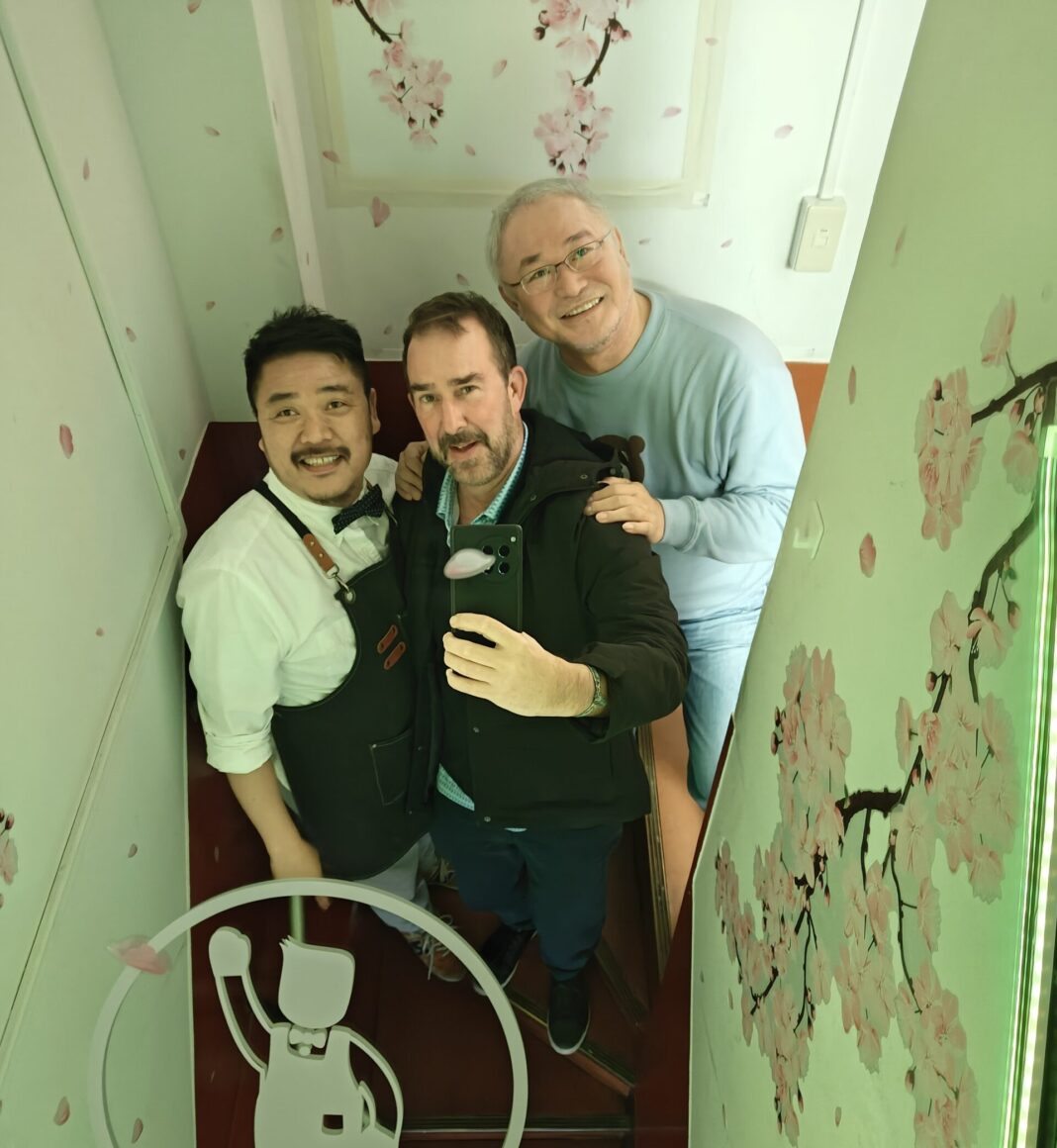
One that I can personally vouch for as being extremely welcoming to gay men from around the globe is Kang Kang (4F, 2 Chome-10-2 Shinjuku, Shinjuku City, Tokyo), which is run by the Korean proprietor Hiro-san who is most definitely good looking and charming, as are his friendly staff and his patrons. Most importantly, Hiro-san speaks English. The bar has a half dozen seats and the booth can seat about 10 people, but Hiro-san will haul out extra chairs if he needs to. He redecorates regularly, according to the season, and is known to host fundoshi (a Japanese loincloth/jockstrap) parties where as many as 50 frisky patrons squeeze into the bar and onto its terrace.
Bar G-Pit (2F, Chome-7-5 Shinjuku, Shinjuku City, Tokyo). Founded in 2010 as a home base for trans men and their allies, this friendly bar, which seats up to 30 people, ticks various foreigner-friendly boxes: menu and signage in English, and transparent pricing (with photos!). The décor is neon and plastic superhero and animated figures.
GB Tokyo (B1, 2 Chome-12-3 Shinjuku, Shinjuku City, Tokyo). Opened in 1986, this is one of the longest-standing gay snack bars and has built its reputation on being international, with English-speaking staff. With its old Hollywood portrait gallery, it attracts an older crowd with lots of regulars.
Pawpads (3F, 2 Chome-12-16 Shinjuku, Shinjuku City, Tokyo). Though you’ll find a lot of younger bearish guys here, they welcome “all genres” of gay men and first timers. They have an English menu.
Bar Blacknude Hero and Club Blacknude (1FB & B1A, 2 Chome-15-12 Shinjuku, Shinjuku City, Tokyo). Although the cover charge and drink pricing is a little complicated (there’s one cover for the muscle bar, where hot muscle guys serve drinks, and one fee for the underwear club, where hot muscle guys put on shows), the website and menu are available in English and they actively welcome foreigners. It’s tiny but the guys are ripped.
agit (1F, 2 Chome-15-9 Shinjuku, Shinjuku City, Tokyo). English-speakers are welcome at this cosy women-centred snack bar. The same team runs Anchor Rainbow Port Tokyo (2 Chome-12-15 Shinjuku, Shinjuku City, Tokyo), an all-gender snack bar with a manga reading library.
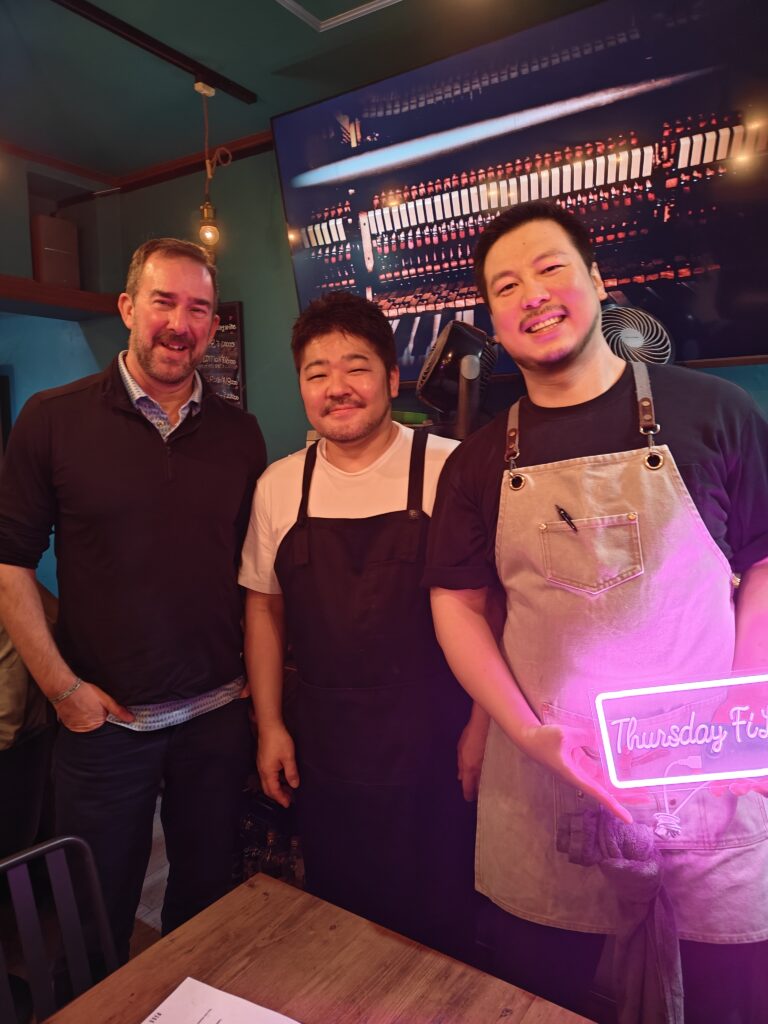
Why settle for a snack when you can have a delicious meal in a gay snack bar setting? Fill (2F, 2 Chome-9-17 Shinbashi, Minato City, Tokyo) is a 12-seater where the owner is a chef who cooks a variety of Japanese and international dishes. Shinbashi is often considered the third-largest gay district in Tokyo after Shinjuku Ni-chōme and Ueno-Asakusa. It attracts more of a business man/after-work crowd.