· Advertising ·

Our insider’s guide to the best of LGBTQ+ Edinburgh

· Advertising ·

Edinburgh city centre is easily one of the world’s most handsome, with its matchy-matchy Georgian, Scots baronial and neo-Gothic architectural styles, presided over by the medieval majesty of Edinburgh Castle, imposing perched atop a volcanic crag. Great photos lurk everywhere.

This is not a niche opinion. The Scottish capital is the most-visited U.K. city after London, attracting more than 2.5 million visitors each year, a number that far exceeds its metro population of around 900,000. In peak season, the summer and fall, it seems like everybody is hauling a rollerbag behind them, headed to or from the train station or airport. 

But looks only get you so far. Edinburgh is also a bastion of culture, known as host of the world’s largest arts festival, the Edinburgh Fringe, which is rich with queer-themed productions; and as the Scottish nation’s centre of medicine, law, literature, philosophy and science. Which means the city’s got brains and a flair for the theatrical. Though Edinburgh is more cosmopolitan and institutionally rich than its rowdy rival, Glasgow, it’s anything but pretentious. Locals have got that deliciously dry Scottish sense of humour and their accent is softer, clearer and easier to understand than those in other parts of the country.

Though it’s often used as a jumping-off point to visit other parts of Scotland, from the borderlands to the Highlands, Edinburgh is worth several days on its own merit. Connected to the world by many international flights, it’s also about a five-hour train ride from London and can be paired nicely with Newcastle-upon-Tyne (read our insider’s guide here) and other northern U.K. destinations.

Britain is broadly progressive on LGBTQ+ issues, though it does not recognize nonbinary identity or ban conversion therapy. The U.K. passed the Gender Recognition Act in 2004, allowing trans people to obtain a gender recognition certificate (GRC) that legally recognizes their gender change; passed the Equality Act in 2010, prohibiting discrimination on the basis of protected characteristics, including gender reassignment and sexual orientation; and legalized same-gender marriage in 2014 (2020 in Northern Ireland).

· Advertising ·
lgbtq+ edinburgh
One of four statues by artist Antony Gormley in the Waters of Leith near the National Galleries of Scotland. One is near a series of HIV/AIDS memorials. Credit: Paul Gallant

Though British and especially Scottish attitudes toward LGBTQ+ people are very favourable, the U.K. has recently had polarizing debates about trans rights, with J.K. Rowling, author of the Harry Potter series—which was written while Rowling lived in Edinburgh—being one of the loudest voices against trans rights. In April 2025, the British Supreme Court ruled that “sex” in the above-mentioned Equality Act refers specifically to biological sex, meaning that having a GRC does not change one’s sex for the purposes of specific sex-based protections like domestic abuse shelters or sports. Before that ruling, in 2022, the Scottish Parliament tried to reform and simplify its gender recognition system, but the U.K. government blocked that bill.

For LGBTQ+ visitors, Edinburgh and Scotland are extremely safe and welcoming, though they might want to avoid conversations with fellow visitors about Rowling; fans of the Harry Potter books and movies make up a large share of the city’s international visitors. Most Potterheads make it a point to see Victoria Street, which might (just might) have inspired the fictional Diagon Alley. With due respect to Rowling boycotters, it’s worth holding your nose to see Victoria Street—the steep curvy route from George IV Bridge to Grassmarket, with its colourful commercial facades, has been a treasured Edinburgh destination since it was built in the 1820s and ’30s.

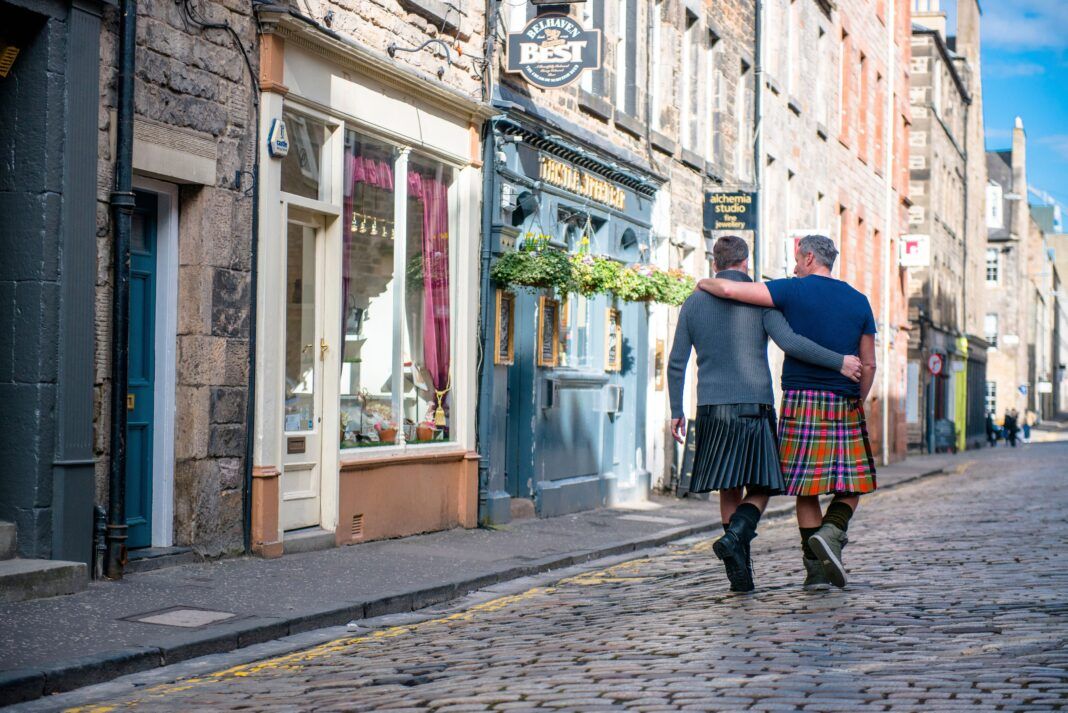
Edinburgh is not a city with rainbow flags on every corner. It doesn’t need them. Queer life is seamlessly folded into the city’s everyday rhythms. The gaybourhood, known as the Pink Triangle, is an informal cluster of businesses around Leith Walk, Broughton Street and Picardy Place. Though locals complain that it’s not what it used to be—the scene has spread out—it’s a central place to stroll around and see which establishments have got something interesting going on. Its establishments attract a mix of LGBTQ+ and straight patrons, and beyond the Pink Triangle, the city’s many bars, pubs, cafés, shops, cultural institutions and community spaces are, generally speaking, inclusive of queerness. Same-gender couples holding hands and gender-ambiguous presentation should barely register.

The city rewards travellers who want more than nightlife. Edinburgh is built for wandering: medieval closes opening onto Georgian avenues; volcanic hills rising abruptly behind neoclassical monuments; waterfront paths in Leith that feel miles from the tourist core. It’s one of the few European cities where you can spend the morning hiking, the afternoon in a museum and the evening at a drag show, and none of it feels rushed.

lgbtq+ edinburgh
The green space between the Royal Mile and New Town. Credit: Paul Gallant

The Royal Mile and the castle is definitely ground zero for package group tours and tour buses. Avoid the crowds by visiting as early as possible in the day. Beyond Old Town and the shops along Princes Street, the city mellows out. The parkland around the two buildings, One and Two, that make up the National Galleries of Scotland: Modern and the walkway along the Waters of Leith are calm, beautiful green spaces just a short walk away from the hustle and bustle.

· Advertising ·

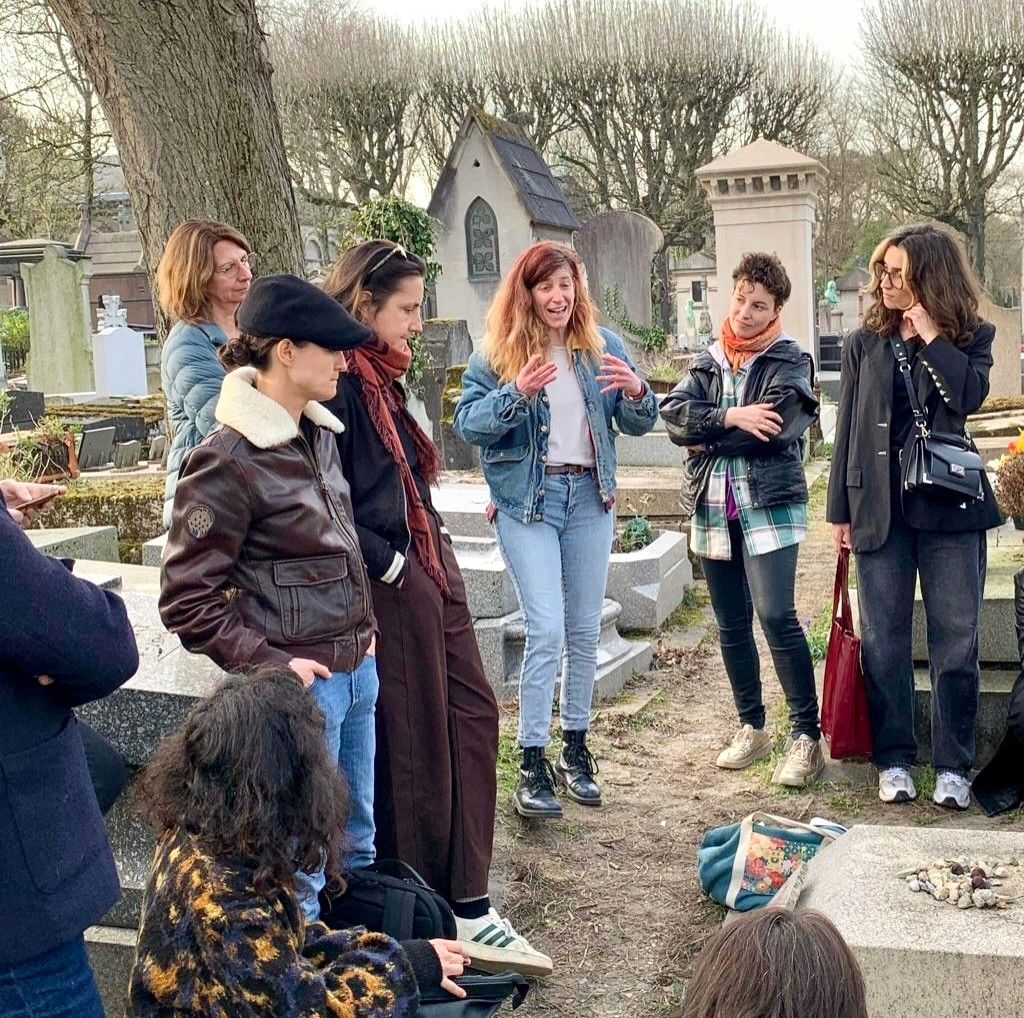
Because there is so much history per square foot in Edinburgh, it’s worth taking a tour. Edinburgh Street Historians offers an LGBTQ+-themed tour. Invisible Cities Walking Tours is a social enterprise that offers walking tours designed and presented by people who have experienced homelessness. I toured with Sonny who gave a fantastic LGBTQ+-inclusive tour that focused on crime and punishment. 

Though anything within viewing distance of the Royal Mile can be quite busy, a visitor only has to walk a block or two back into New Town, with its immaculately symmetrical squares, to get a breath of air. Or venture into the surrounding hills that define the city. The waterfront area of Leith, though it has got style and culinary treats to spare, also feels like an unhurried immersion in what Scottish culture is doing right now.

Haggis? Yes. Pride-themed tartans? Yep, you’ll find those here too. Here’s our insider’s guide to the best of LGBTQ+ Edinburgh.

Pride and Other Events

Pride Edinburgh (typically late June; 2026 dates TBD). Edinburgh Pride is one of the U.K.’s most politically grounded Pride events, with a strong focus on visibility, activism and community participation rather than corporate spectacle. Close to 50,000 attended the 2025 march and festival, but there are other events throughout the month. The march typically moves through central Edinburgh, followed by performances at the free festival in Bristo Square. 

Edinburgh Festival Fringe (August 7 to 31, 2026). Though the world’s biggest arts festival is not officially an LGBTQ+ festival, the hundreds of queer comedians, actors, drag artists, theatre makers and other theatrical types who take over the city each August certainly makes it feel like one. Incredibly, more than 3,000 shows typically take place at as many as 300 venues over three weeks. Though the majority of them are part of the festival, many others are produced by theatre makers trying to ride the festival’s coattails. Queer programming pervades the late-night slots.

· Advertising ·

Scottish Queer International Film Festival (SQIFF) (October 19 to 24, 2026).
Scotland’s leading LGBTQ+ film festival showcases international features, shorts and experimental cinema alongside Scottish queer voices. Screenings are typically paired with filmmaker Q&As and community events that attract a mix of locals and visiting film lovers.


Edinburgh International Book Festival (Charlotte Square Gardens, Edinburgh). The Book Festival consistently programs LGBTQ+ authors and queer-focused discussions, making it a key cultural stop for literary-minded travellers. Panels often explore queer history, identity and politics in a global context.

What to See & Do

Edinburgh Castle (Castlehill, Edinburgh). We’ll start with the mandatory. Edinburgh Castle dominates the skyline, offering sweeping views that help visitors physically understand the city’s layout. One of the oldest fortified places in Europe, it has a long history as a royal residence, military garrison, prison and fortress. There are several ways to tour the castle depending on how much time you have. Get there as early as possible to beat the tour-bus crowds. The Royal Mile is a series of streets connecting the castle to the Palace of Holyroodhouse. History, fridge magnets and Scottish tweed lurk in its every nook and cranny.

Grassmarket/Victoria Street. Built between 1829 and 1834, curvy and photogenic Victoria Street connects the Royal Mile near George IV Bridge to Grassmarket, which is where public executions were conducted for centuries. Sounds a little macabre, but the historic area is a great and somewhat less touristy place to grab a bite near the Royal Mile, and a lively place in the evenings for a drink.

Arthur’s Seat (Holyrood Park, Edinburgh). This extinct volcano provides one of the best city views in the U.K. From the top you can see Old Town, the Firth of Forth and on a good day the Highlands in the distance. There are two routes up, one a more gentle hike than the other.

National Museum of Scotland (Chambers Street, Edinburgh). Free and expansive, with exhibits on everything from transportation to animals to Scottish history, this museum has something for everybody. Housed on two connected buildings, one composed of grand airy galleries built in the “Victoria birdcage” style. Special exhibits increasingly reflect diverse narratives, which sometimes include LGBTQ+ lives within Scottish history.

National Galleries of Scotland: Modern One and Two (73 and 75 Belford Rd., Edinburgh). Spread across two buildings and a sculpture park, the collection includes work from the last 120 years including Pablo Picasso, Everlyn Nicodemus, Edvard Munch, Anne Redpath and gay bad boy Robert Mapplethorpe. Special exhibitions can increase the queer content.

National Galleries of Scotland: National (The Mound, Edinburgh). Sitting on the artificial hill connecting the Old and New Towns, this major gallery has work by Scottish and international artists working between 1300 and 1945. It’s where art fans will find work by Vermeer, Titian, Rembrandt and Velázquez, as well as William McTaggart, Anne Redpath, Phoebe Anna Traquair, Charles Rennie Mackintosh and the Glasgow Boys.

The Shore (Leith). Once a gritty industrial harbour, Leith has transformed into one of the most sophisticated and atmospheric corners of the city, often ranked among the world’s cooler neighbourhoods. A 15-minute tram ride from the city centre, a visitor can also follow the Waters of Leith from Dean Village or Stockbridge all the way to the Albert Dock basin where they’ll find cool restaurants, cafés and boutiques. Because it’s not far at all from the city centre, it’s a fine alternative as a scenic place to stay.

Dean Village (around Dere House, Damside, Edinburgh). Just a 10-minute walk from the busy shops of Princes Street, Dean Village was a grain-milling hub for more than 800 years. Sitting in a steep gorge below the main city level, it was bypassed by much of the modern development that changed the rest of Edinburgh. There’s a cute pedestrian bridge that attracts a lot of selfie-takers and various architectural beauties. From here you can follow the Waters of Leith all the way to The Shore in Leith.

lgbtq+ edinburgh
Edinburgh Gin is a stylish experience. Credit: Paul Gallant

Edinburgh Gin (Arch 16, The Arches, E. Market St., Edinburgh). Although you’ll see lots of ads for whisky tours while in Scotland, some hosted by global brands, this is a cooler, more contemporary sort of distillery tour from a company that wears its love for the city on its sleeve. Founded in 2010, Edinburgh doesn’t have the legacy of some of the whisky distilleries, but its progressive approach to gin, so close to the Royal Mile, makes it something of a reprieve from all the history. Let’s have a kiki.

Where to Stay

Malmaison Edinburgh (1 Tower Place, Leith, Edinburgh). Trade the gothic crowds of the Old Town for a slice of maritime chic. Nestled in the heart of the historic Shore, this boutique hotel is housed in a beautifully converted Victorian building. Today, it’s a sanctuary of bold design and effortless style. Think moody lighting, velvet finishes and a cocktail list at Mal Bar that’s as sharp as a drag queen’s eyeliner. Super friendly staff.

Alva House (23 Alva Place, Edinburgh). This adults-only gay-owned and operated guesthouse is located in a quiet residential area just a short walk from the city centre. Expect a personalized welcome, insider tips on the best local queer spots and a breakfast spread that will keep you fuelled for a hike up Arthur’s Seat.

The Broughton Townhouse (37-39 Broughton St., Edinburgh). Located in the heart of the Pink Triangle, this seven-room boutique hotel, in a gorgeous Georgian townhouse, is one of the most convenient bases for LGBTQ+ visitors. It’s comfortable, discreet and steps from Edinburgh’s queer nightlife hub.

Kimpton Charlotte Square (38 Charlotte Square, Edinburgh). Tucked away in a prestigious corner of New Town, the Kimpton is a masterclass in inclusive luxury. The staff here pride themselves on a “come as you are” philosophy that makes LGBTQ2S+ travellers feel instantly at home. With its blend of Georgian elegance and bohemian edge—plus a top-tier spa to iron out any travel stress—it’s a base for those who want to experience Edinburgh’s sophisticated side without the stuffiness.

House of Gods (233 Cowgate, Edinburgh). “Treat me like I’m famous” is the slogan at this OTT stage set of a boutique hotel, including animal-skin prints and tassels, located in the historic Cowgate district. You’ll feel like you’re in a production of Cabaret but with a contemporary spin.

The Glasshouse (2 Greenside Place, Edinburgh). Right at the edge of Edinburgh’s Pink Triangle, this five-star boutique, part of Marriott’s very LGBTQ+-friendly Autograph Collection brand, is hidden behind the gothic facade of a 172-year-old church. Inside, it’s all sleek glass and modern lines. The standout feature is the two-acre rooftop garden—one of the best hidden gems in the city—where you can enjoy a malt whisky while looking out over Calton Hill.

ibis Styles St. Andrew Square (19 St. Andrew Square, Edinburgh). A design-conscious but budget-friendly option with personality from Accor that’s popular with younger queer travellers and Fringe Fest crowds. Some rooms have balconies. Buffet breakfast always included.

Where to Eat

La Casa (103-105 Dalry Rd., Edinburgh). This family-run gem brings the sun-drenched flavours of Spain and Greece to the North of Edinburgh. Their tapas and mezze are designed for sharing, featuring everything from sizzling gambas rojas to creamy halloumi. It’s the perfect spot for a relaxed date night or a lively catch-up with friends before hitting the bars at The Shore. There are three locations in the city, but this one on Leith Walk is the original.

Mirin (9 Albert Place,  Edinburgh). Tucked away in a minimalist, industrial-chic space in Leith, Mirin is a love letter to Asian-inspired small plates. This is where Edinburgh’s creative and queer crowds head when they want serious food without the white tablecloths. Think pillowy bao buns and charred greens. The intimate, communal vibe makes it easy to strike up a conversation with your neighbours.

The Basement (10a-12a Broughton St., Edinburgh). Located in the heart of the Pink Triangle, The Basement has been a cornerstone of Edinburgh’s LGBTQ+ social scene for decades. This subterranean Mexican-inspired cantina is loud, proud and perpetually packed. It’s the kind of place where the tequila flows as freely as the conversation, and the guacamole is smashed fresh to order.

Bonnie & Wild (St. James Quarter, Edinburgh). For the indecisive traveller who wants it all, Bonnie & Wild is a high-end Scottish food hall located within the sleek St. James Quarter. A curated showcase of Scotland’s best independent chefs and producers, from fresh-off-the-boat seafood at Gary Maclean’s Creel Caught to artisanal gelato. The open-plan, communal seating area is a melting pot of Edinburgh life—it’s so popular you might have to wait a bit to enter the food hall and be assigned seating.

Arboosh (16 Haymarket Terrace, Edinburgh). For a quick bite between bouts of credit card usage in Edinburgh’s commercial heartland, try this Indian-Arab fusion spot. Shawarma, grilled chicken and milkshakes.

The Paradise Palms (41 Lothian Street, Edinburgh). Part bar, part restaurant, part record store, part performance space, Paradise Palms is a queer-friendly all-in-one night out. The food is a vegan take on Mexican, the cocktails equally creative.

Dogstar (17 Portland Place, Leith, Edinburgh). From Michelin-starred chef James Murray, this ain’t your daddy’s Scottish food. The menu changes on a weekly or even daily basis, but expect a variety of seafood, locally sourced ingredients and an unpretentious neighbourhood vibe.

The Ox (49-51 London St., Edinburgh). There are several beloved Sunday roasts around the Scottish capital; each local has their own favourites. The Ox is close to the city centre, dog-friendly and does a great job on meat. There’s also a vegetarian version.

Where to Party

Edinburgh’s queer nightlife is centred around the Pink Triangle, an area at the top of Leith Walk and Broughton Street, across from Picardy Place. While the city is inclusive overall, these venues are the heart of the community.

CC Blooms (23-24 Greenside Place, Edinburgh). Probably the city’s main gay bar, right at the centre of the Pink Triangle, CC Blooms got a glow-up behind its 18th-century façade in 2025. The upstairs opens earlier, has comfy velvet banquettes and more food options. The cellar bar, known as Lab, is the club space where dancing, drag, karaoke and other assorted mayhem takes place.

The Street (2B Picardy Place, Edinburgh). This hybrid space is a very stand-and-model gay bar upstairs with DJs, dancing, performances and a more mixed crowd downstairs. The space isn’t huge, but boy, does it get packed and lively on the weekends.

Planet Bar & Kitchen (6 Baxter’s Place, Edinburgh). The city’s longest-running gay bar opened in 1993 under the name Galaxy. From the street, it looks like a well-lit diner, but it gets more raucous and clubby as you move toward the back. Drag on Fridays, DJs on Saturdays and drink promotions on the other nights—there’s always a reason to drop by.

Regent Bar (2 Montrose Terrace, Edinburgh). This warm, homey pub is great for a drink and a wee chat. Though the crowd is mixed, the back room is reserved for bears after 9 p.m. and the Bear Scots social group meets here the second Saturday of each month.

Sneaky Pete’s (73 Cowgate, Edinburgh). Not exactly a gay club, but reliably queer-friendly, especially on electronic and alternative nights. Scotland’s longest-running queer club night, Hot Mess, often happens here.

Hot Mess (Various venues, sometimes The Biscuit Factory, 4-6 Anderson Place, Edinburgh). This sexy-dancy club night comes in various flavours, sometimes partnering with other promoters. Their occasional Big Hot Mess party is worth changing your plans for.

Wuthering Dykes Book Club (Various venues, often Lighthouse Books Café, 43-45 West Nicolson St., Edinburgh). Although there are no Saphically dedicated party spaces in Edinburgh, this book club hosts literary-themed events throughout the year. The social group That’s So Fruity organized regular meetups for queer women and nonbinary people including speed dating and friending nights.

Where Gay and Bi Guys Can Have Fun

Steamworks Sauna Edinburgh (5 Broughton Market, Edinburgh). The Scottish capital’s only gay bathhouse attracts horny locals and visitors alike. Open 11 a.m. to 11 p.m. daily, its steam room, sauna and various play rooms are busiest on the weekends.

Where to Shop

Lighthouse—Edinburgh’s Radical Bookshop (43–45 West Nicolson St., Edinburgh). This queer-owned and woman-led independent community bookshop, which has a 32-year history, is a space for activism as much as it is a great place to buy books, find community and attend literary events.

Armstrongs Vintage (81–83 Grassmarket, Edinburgh). This vintage clothing shop, which started out as a men’s outfitter in 1840, is popular with queer locals—and visiting Fringe performers—for its retro looks and gender fluid fashion.

Q Store (5 Barony St., Edinburgh). This sex shop has a decent selection of fetish gear, men’s underwear, adult toys and erotica.

Paper Tiger (53 Lothian Rd., Edinburgh, and other locations). Known for design-led gifts, books and art objects that appeal to the creative classes.

St. James Quarter (St. James Crescent, Edinburgh). Rising like a golden ribbon from the east end of the New Town, the St. James Quarter is “lifestyle district” that has redefined the city’s skyline since opening in 2021. Anchored by the swirling “Walnut Whip” design of the W Edinburgh hotel, inside there are more than 80 shops, as well as the Bonnie & Wild food hall (see the Where to Eat above).


Editor’s note: The cost of the writer’s trip to Edinburgh was supported by VisitScotland. The sponsor of the trip did not direct or review coverage. The views expressed are the writer’s own.

Travel tips and insights for LGBTQ2S+ travellers. In-depth travel guides and inspirational ideas for your next trip.

Pink Ticket is sent out every other week.

Travel tips and insights for LGBTQ2S+ travellers. In-depth travel guides and inspirational ideas for your next trip.

Pink Ticket is sent out every other week.

· Advertising ·
· Advertising ·
· Advertising ·

Trending Stories

· Advertising ·

Related Articles

· Advertising ·