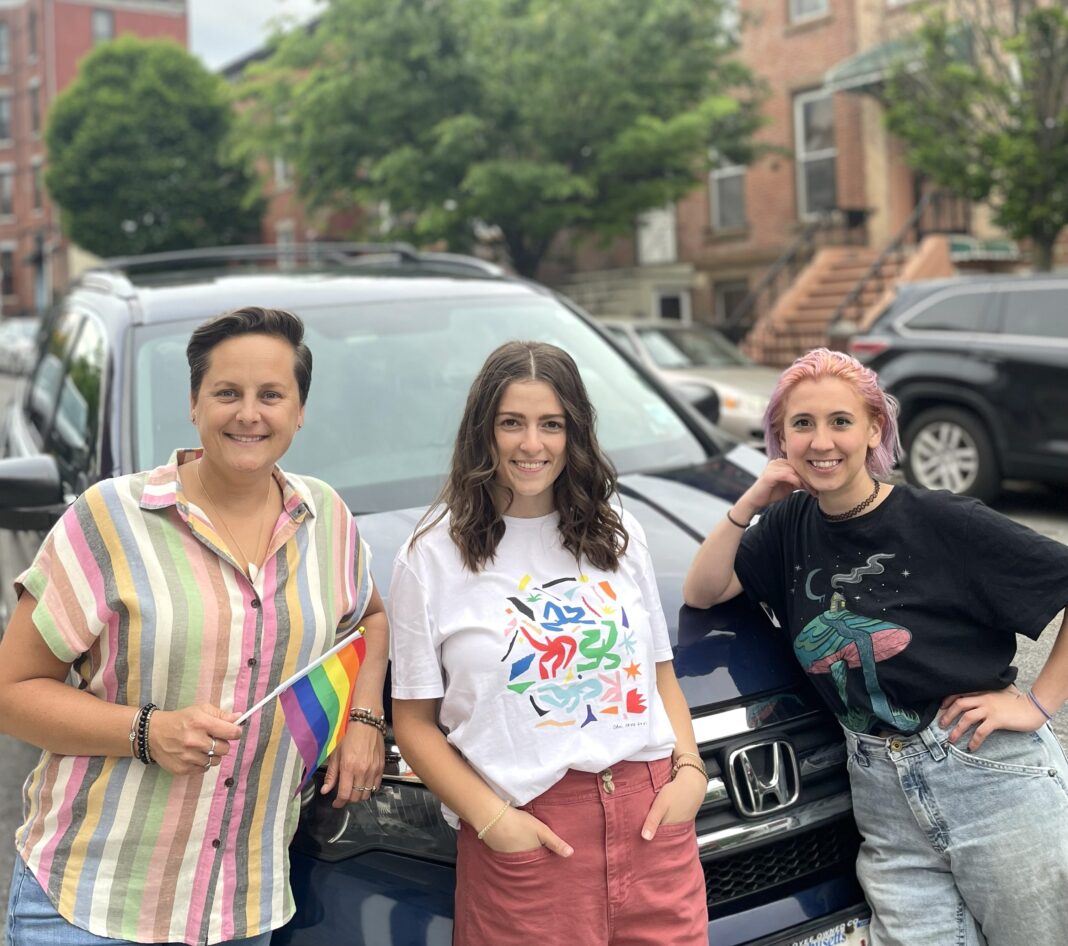
In the fall of 2021, writer and producer Rachel Karp, her then-girlfriend (now wife) Jen McGinity and her best friend Sarah Gabrielli took a 30-day road trip across the U.S., visiting 20 lesbian bars. That’s a lot of pints and cocktails over the course of a month.
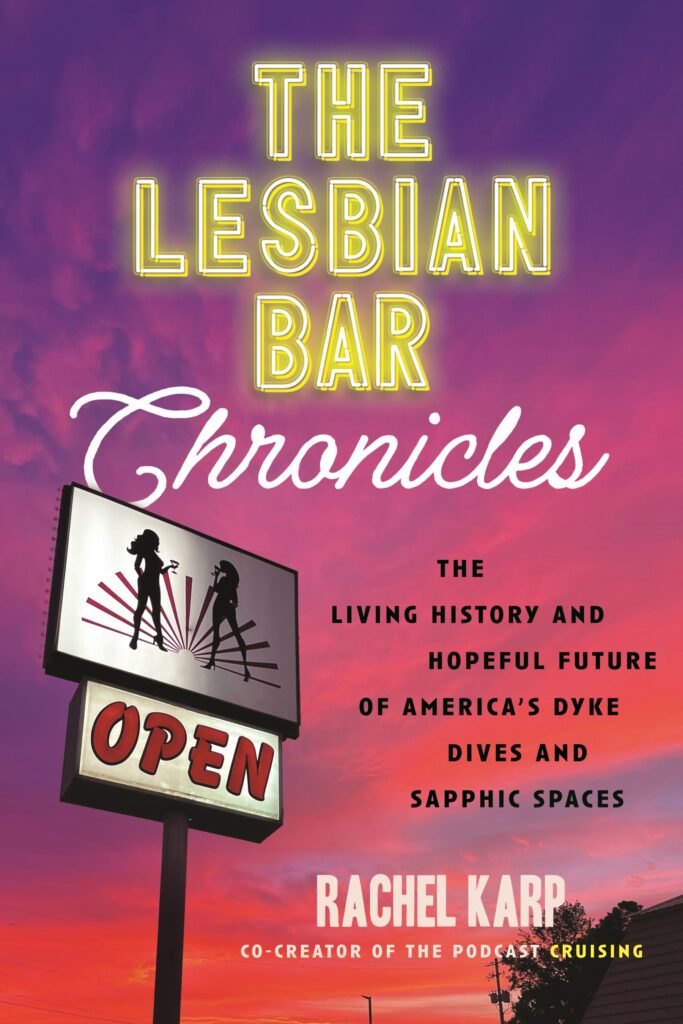
That whirlwind tour of America’s sapphic scene formed the foundation of their ongoing podcast, Cruising, about the history and personalities who have shaped spaces for queer women, and now Karp’s book, The Lesbian Bar Chronicles: The Living History and Hopeful Future of America’s Dyke Dives and Sapphic Spaces.
Rather than reviewing or merely fêting each of the stops on their itinerary, the book digs deeply into the history of each venue, exploring the unique personal visions that conjured them into being and the social circumstances, including the need to party and form community, that keep those visions afloat. The book also chronicles the history of legendary lesbian bars that no longer exist. In these profiles, Karp paints a picture of lesbian life in the U.S. over the last 60 years, going back to a time when same-gender couples couldn’t even kiss or dance together without risking arrest. The Lesbian Bar Chronicles is an entertaining and enlightening read, which also makes a great bookend to Alex Ketchum’s recent Ingredients for Revolution: A History of American Feminist Restaurants, Cafes and Coffeehouses.
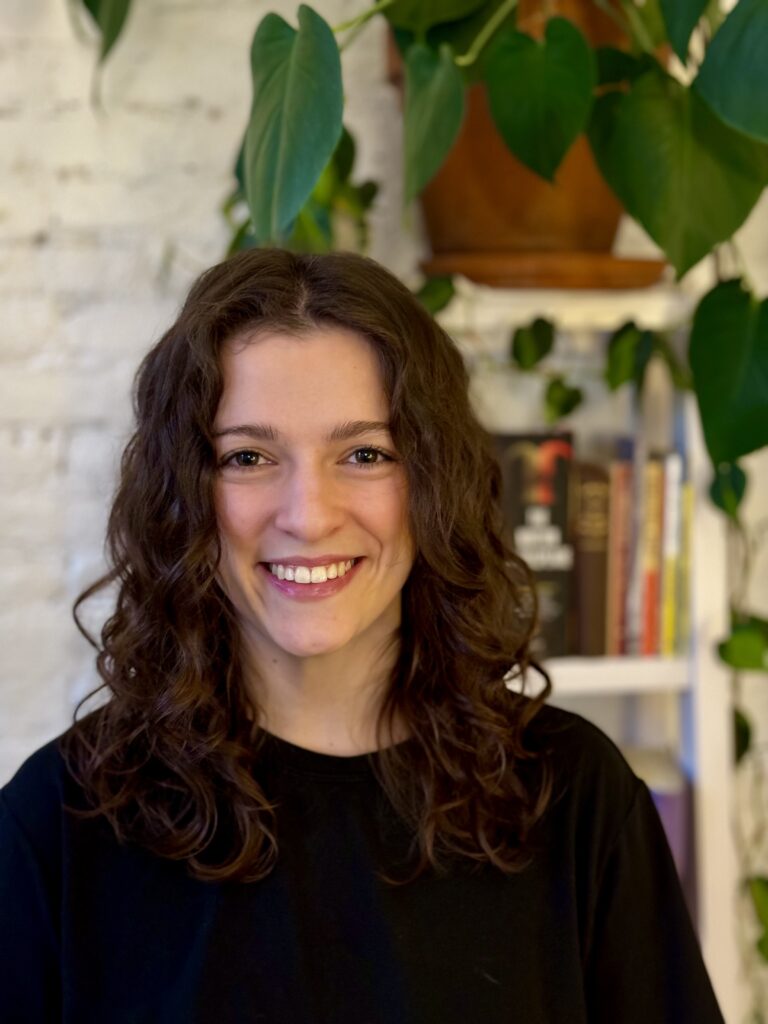
Pink Ticket Travel talked to Karp and Gabrielli (with guest appearances by McGinity) about the road trip that has defined their lives for the last five years.
For the purposes of the book and this interview, a lesbian bar is defined as “a) a bar that is b) owned or operated by lesbians, LGBTQ+ women or nonbinary folks, and c) intentionally welcomes lesbians, LGBTQ+ women and nonbinary folks.”
Before this whole adventure with the road trip, the podcast and the book, what made you interested in lesbian bars, aside from their being a place to grab a drink and have fun?
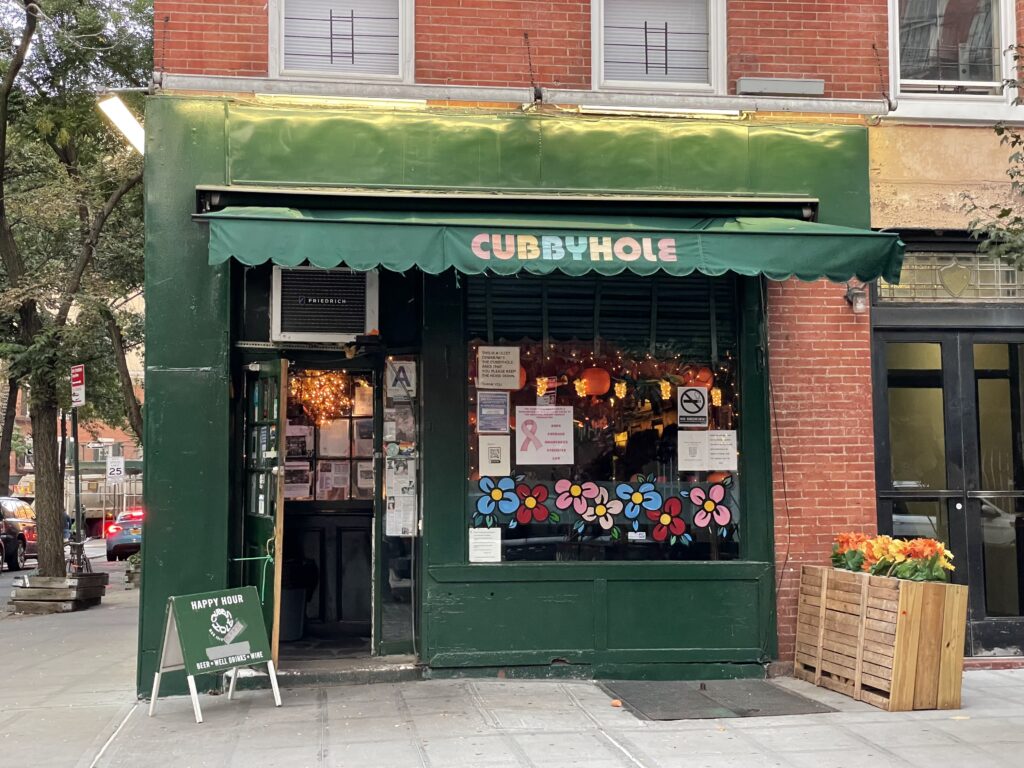
Karp: I vividly remember my first time walking into a lesbian bar, which was Cubbyhole (281 West 12th St., Manhattan, New York City). I was probably not quite old enough to be there, but old enough to get in. Just the feeling of being entirely surrounded by other queer people for the first time in my life was a very powerful experience and kept me coming back to lesbian bars throughout my early twenties.
As we started to think about making a podcast together, I started to latch on to the sense that lesbian bars, in particular, are such vivid containers for stories. There are so many regulars, so many people that go to them that have their own interesting stories. There’s a lot of history in the New York lesbian bars that we were interested in. At the same time, there were headlines about how lesbian bars were disappearing and closing. We were at first interested in exploring that phenomenon, which I think we discovered to not really be accurate over the course of the past five or six years.
You essentially did a road-trip bar crawl, which sounds like quite a month-long party. What were some of the challenges?
Karp: We were tired. It was an intense pace—20 bars, 10,000 miles in 30 days. We also had our car broken into in L.A., which was an unexpected wrench in our plans. Sarah’s skateboard got stolen.
Gabrielli: My hard drives were in the car, along with expensive recording equipment, which they didn’t take. We could have lost all of our material.
One of the things that stood out when reading about each bar was how the founders—their personalities, their quirks and interests, their way of seeing the world—really defines these spaces.
Gabrielli: Number one, having a strong leader is really important in people feeling connected to the space and feeling safe there. We saw that a lot—having a leader that was really serious about keeping their customers safe. I’m thinking about Alice Brady’s [whose bar was a hub of lesbian life in New Orleans in the 1950s and ’60s; Brady passed away in 2021]. She’s a huge character and she was very serious about keeping people safe. She had all these different protocols in regards to what people wore—making sure people wore clothes that weren’t going to get them arrested—and forbidding people to dance together because it was illegal.
Karp: As far as the bars that are still around today, they tend to have leaders who have been able to balance the history and the legacy and their own personal quirks with the evolution of the community’s needs.
Gabrielli: What the market really wants now is owners that are accepting of all sorts of gender and sexual identities. That’s something we heard over and over again: “All are welcome as long as you respect the space and respect that its purpose is to serve queer women or lesbians.” We’ve spoken to people that have explicitly said, “My business wouldn’t have been able to survive if I didn’t welcome gay men and other people into the space too as paying customers.”
I know there’s a lot of grey area, but I kinda wanna divide lesbian bars into “old school” and “new school.”
Karp: It’s tough because I really feel that even the old school bars that have been around since the ’60s are still around because they have figured out how to evolve in some way. I feel like the biggest difference is just the history and the legacy, less so the way the bar serves its customers today.
McGinity: I think nowadays there’s an event focus that’s totally different than in the past. Now there’s karaoke night, you’re doing trivia, you’re hosting a story slam. There are so many things happening on any given evening.
Karp: There are some bars that are clearly cocktail bars, and some bars are more like old-school dive bars. The Bush (333 Troutman St., Brooklyn, New York City), Nobody’s Darling (1744 W. Balmoral Ave., Chicago)—those are cocktail bars. Then you definitely still have your classic old-school dive bars, like Ginger’s (363 5th Ave., Brooklyn, New York City) or Cubbyhole.
McGinity: I think the non-alcoholic options have changed drastically, too. Before, if you weren’t drinking, you were having a soda and that’s it. Now there are a lot more N.A. options. We discovered non-alcoholic spirits at the diviest of dive bars, which was Alibi’s in Oklahoma City, Oklahoma. [Alibi’s closed in 2024.]
The oldest surviving bar you visited was Wild Side West (424 Cortland Ave., San Francisco), which has been around since 1962. What makes it special?
Karp: Wild Side West was one of my favourites. It’s extremely eclectic. I fell in love with the aesthetic. The bar has moved locations twice, but you definitely feel like remnants of past decades are in the space itself. It goes back to the original owner who had a tendency to collect things and turn them into art or décor for her bar. It’s more of a neighbourhood crowd.
Gabrielli: It’s an institution, but so many people who live in San Francisco don’t know about it. They’re the only lesbian bar in the United States without an Instagram account. When they first opened, people in the neighbourhood didn’t want a lesbian bar there, so there was vandalism. But then they’d take a toilet seat that was thrown through the window and turn it into a sculpture in the backyard. The garden is really what makes it so special.
I know it’s hard to pick more favourites out of so many cool places, but please pick another favourite for me.
Gabrielli: I’ve been really moved by The Sports Bra (2512 N.E. Broadway, Portland, Oregon), which opened in 2022. It’s the first of its kind—a women’s sports bar. There’s a real energy behind it as a new entity that the community is excited about. It’s a really cool example of the “new age” of lesbian spaces.
Karp: Another one that stands out for me is Frankie’s (3200 N. May Ave., Oklahoma City). We were somewhat surprised to find such a vibrant queer and lesbian community in Oklahoma. The night we visited was “family night,” all the performers, the regular customers, their friends, just hanging out. We were immediately welcomed into the fold of their chosen family.
Your tour has given you such a bird’s eye view of the scene. What opinions did you form about what kinds of neighbourhoods and spaces are fertile ground for lesbian bars?
Karp: A big trend, particularly with bars that have been around for a decade-plus, is that they were opened in “less desirable” neighbourhoods that have since been massively gentrified, in part because of the queer community putting down roots. Then, after 10 or 15 years, the lesbian bar can no longer afford rent on the space in the neighbourhood that it made more desirable.
Bars are opening and closing all the time. Are you going to continue to keep track?
Karp: The podcast is ongoing. The third season of Cruising has moved away from specifically bars because we covered as many as were available in the first two seasons. Now, I’ve been interviewing interesting lesbians about all different kinds of lesbian spaces—women’s land, activist groups, women’s sports, but we’ll include new bars, too.
This interview has been edited for length and clarity.