“LGBTQ2S+ inclusive” can mean different things depending on who you’re talking to. For one tour company, it might mean a rainbow flag decal on their tour bus bumpers. For another, it might mean a same-sex couple occasionally popping up in their promotional material. But very few companies think deeply enough about trans experiences and perspectives to provide truly inclusive LGBTQ2S+ experiences.
Many trans travellers attest that “LGBTQ2S+ friendly” doesn’t always mean “trans friendly.” That T doesn’t often get full consideration.
The problems begin when trans people don’t feel seen or heard along their journey. In airports, for example, a mix of governments and airport authority policies can make trans travellers feel like outcasts. Dubbs Weinblatt, a NewYork City–based educator, facilitator, speaker, podcaster, and the founder and CEO of the LGBTQ2S+ empowerment organization Thank You For Coming Out, says that most airports have failed to take trans and nonbinary passengers into account. Weinblatt suggests that all airport restrooms should be all-gender (there are some that have all-gender washrooms in addition to binary washrooms). As well, they say that security protocols implemented by the Transportation Security Administration (TSA) in the U.S., and by other government agencies in other countries, should not consider gender at all.
Adriana Roberts, a San Francisco–based performer, DJ and founder of the nightlife and music brand Bootie Mashup, is also critical of why gender is relevant to airport security. “When will the TSA modify those damn full-body scanners so they don’t clock your birth gender if you haven’t had bottom surgery?” (Prior to 2025 and the second Donald Trump presidency, the TSA had been updating body scanners, so that operators would no longer need to choose a gender; newer models don’t need to make assumptions about body contours or gendered anatomy to find security anomalies.)
And it’s not just the machines that shouldn’t be taking gender into account. “Can we just remove gender markers from government IDs entirely?” asks Roberts. “Is that a thing that the entire world can agree on? Probably not, but a girl can dream.”
Beyond law and government policies, the tourism industry itself—airlines, hotels, cruise companies, tour companies, destination marketing organizations, media outlets—has a lot of improving to do.
“I’ve been misgendered at the airline check-in desk. I’ve been misgendered by airline flight attendants. I have been misgendered at the check-in desk at hotels,” says Gabrielle Claiborne, an Atlanta-based activist, speaker, business owner, and chair of the Gender Diverse Travel Advisory Group of the International LGBTQ+ Travel Association Foundation. “That’s a normal occurrence for a lot of gender-expansive people.”
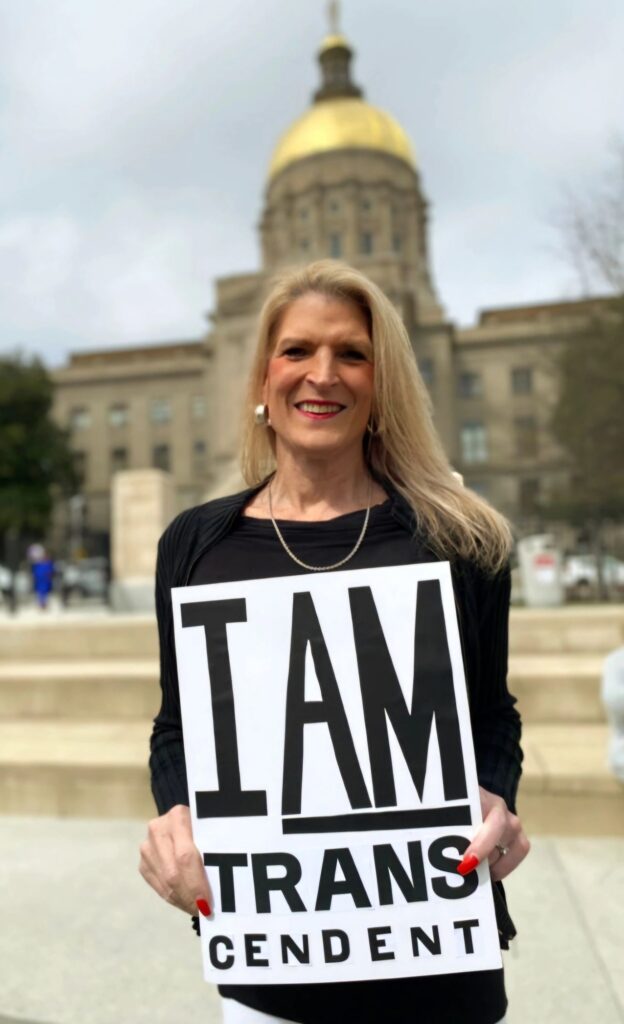
Claiborne says that most of the travel industry operates within a system where gender is presumed. But that presumption can be wrong. “You cannot make a judgment of a person’s pronouns by simply listening to their vocal register or perceiving their outward gender expression,” she says. “Those are misleading clues.”
Claiborne says that truly inclusive travel companies must educate staff about gender-expansive customers, encourage them to use inclusive language, and also update their reservation systems and other methods of collecting customer data. If travellers can’t enter their chosen name, list their proper pronouns or select appropriate honorifics (Mr., Mrs., Miss, Dr., etc.) early on in their dealings with a service provider, they can immediately feel apprehensive.
“If you’re not asking for a chosen name, you’re going to deadname that person from the get-go,” says Claiborne. “If you’re not providing a place where I can list my pronouns, you’re more likely to misgender me.”
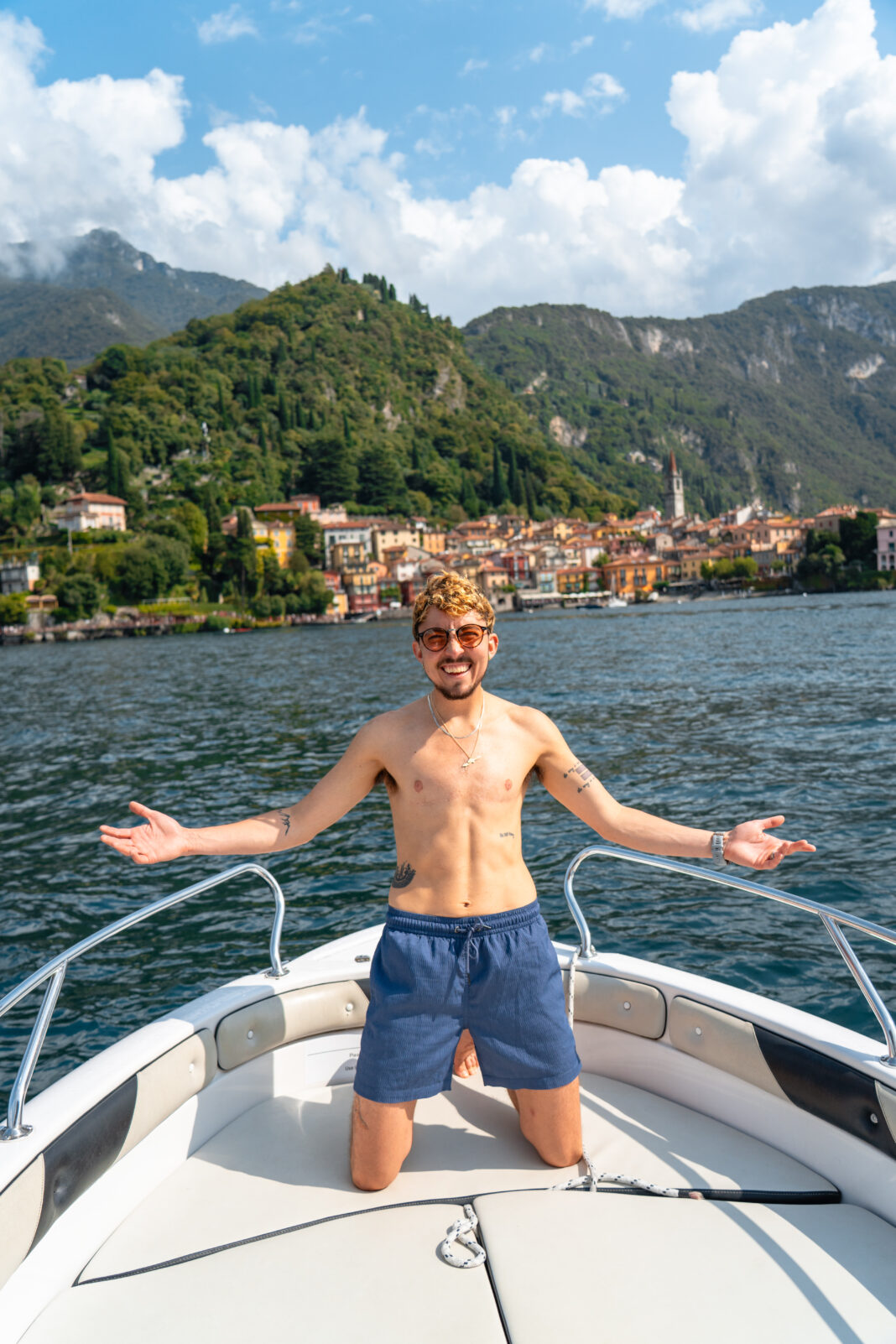
Travel influencer Sam Goldon says that travel writers, editors and influencers can help by vetting the places they’re writing about (or marketing) for their trans friendliness, not just their gay, lesbian and bi friendliness. Goldon says travel media should also be drawing attention to destinations and venues that are not trans friendly. “Call those areas out and give them an opportunity to do better,” they say.
Sonali Khan, a trans rights activist based in India and a member of IGLTA Foundations’s Gender Diverse Travel Advisory Group, suggests that it should also be standard practice for hospitality-focused businesses to display a non-discrimination policy about gender identity. “Having a policy on a hotel’s website would make it very easy for us to identify [how friendly they are],” she says.
Khan selected a hotel in Vietnam solely because she spotted a barely visible rainbow flag in one of the hotel’s photos on Google Maps. Though she had been testing her luck, she happily discovered upon arrival that the hotel was not just queer friendly but also trans friendly. “Even the reception person was trans,” she says.
Khan says it’s often mid-budget hotels and hostels—as opposed to international chains and luxury brands—that neglect to consider trans travellers. If they do welcome trans guests, it’s these lower-cost players who fail to communicate it to potential guests. But many trans travellers cannot afford to stay in the luxury or higher-end properties that market themselves to queer people.
Kayley Whalen, a Ph.D. student in anthropology, says she often sees statistics claiming that “LGBTQ2S+ tourists” spend more. While that may be true for certain letters of the acronym, “I can guarantee that the ‘T’ spends less,” she says.
Whalen says that this is why many queer-friendly establishments don’t explicitly welcome trans people. “We don’t fall into that category that most travel blogs and the travel industry are interested in, because we don’t have the free money of gay men,” she says. Yet trans people have a high interest in travel, including budget travel. “It is one of the few ways we feel we’re able to express ourselves. Take Thailand, for example. Every trans person dreams of going.”
For those on the tightest budgets, hostels are often where they’ll end up staying. But even a hostel that would be considered safe and comfortable by cis travellers may not be for a trans person.
“A hostel is usually divided into male and female [dorms],” says Khan. “It feels a little uncomfortable for me to go to a hostel where people might question my gender and ask me, ‘Where do we put you?’”
How LGBTQ2S+ travel companies can do better
A recent study of trans identity suggests that about one percent of the U.S. population aged 13 or older identifies as trans, though numbers vary around the world and depend on how a culture defines trans. So trans travellers can be hard-pressed to find tourist activities that cater specifically to them. Whalen describes such experiences as “trans-centric travel” as opposed to “trans-inclusive” travel. But she says industry players ranging from tour guides to tourist attractions can at least educate themselves on trans issues. “I want to see trans stories being told and included,” she says.
Whalen recalls a “goddess tour” that she went on in Nepal, with the women-owned trekking company Explore Hub Nepal, where the hosts were able to talk about queer and specifically trans religion, culture and history. “As a trans person trying to think about questions like spirituality and history and where my place is in the world, those are the things that interest me,” she says.
Whalen says that, at the very least, tour guides for travel companies that cater to the LGBTQ2S+ community should be educated on trans topics and be willing to speak on them. Even a small nod to trans people at an otherwise cis- and straight-leaning attraction can go a long way. In Lima, Peru, for instance, she discovered that a small section of the Lugar de la Memoria (Bajada, Ca. San Martín 151, Miraflores), a museum dedicated to memory, tolerance and social inclusion, was dedicated to queer and trans people who survived the Peruvian internal conflict of the 1980s and ’90s. “I was like, ‘Oh my God. This is amazing seeing that representation at a museum.’”
Goldon and their partner host group trips that include many trans travellers. But such trips are not the norm in the queer travel industry.
“I will be honest and say that our current client base is not gender diverse,” says Robert Sharp, owner and co-founder of Canada-based Out Adventures, which markets itself as LGBTQ2S+ travel, but its client base is mostly gay men. Sharp has actively been making efforts to improve. “We recently ran a special trip with hand-selected group members who align with our goal of being more inclusive to the broader LGBTQ2S+ community. We’ll slowly start to incorporate these guests into our marketing.”
In addition to organizing private excursions for trans clients and requiring that new suppliers undergo diversity, equity and inclusion training, Out Adventures has also started training team members to address the needs of trans and nonbinary travellers. “It’s important for us to work with trans and nonbinary clients, to understand how they present physically and their identification markers, so we can outline any potential issues and recommendations when facing immigration scrutiny at home and abroad,” he says.
The cruise company VACAYA also markets itself as an LGBTQ2S+ experience, though a majority of its guests are gay men. Co-founder and chief marketing officer Patrick Gunn says training is integral to the company’s inclusion practices. “We had to ensure our staff training went beyond surface-level inclusivity and fostered a deep understanding of gender identity, pronouns, lived experience and the very real safety concerns trans people face when travelling,” he says. “Centring trans and gender-diverse people requires unlearning, rebuilding and at times pushing against systems that were never designed with them in mind.”
Gunn says this process includes adding trans voices to VACAYA’s entertainment and host lineup. It also means ensuring that partners improve how gender data is implemented across booking systems, onboarding forms and onboard experiences. VACAYA trips feature gender-neutral bathrooms as well as lounges where gender-expansive guests can connect and decompress.
Most travel companies depend on an array of suppliers—drivers, guides, caterers, venues, resorts, cruise lines, ports, performers—to deliver experiences. Gunn has had to occasionally nudge VACAYA suppliers in the right direction. “Not all of them started from the same place regarding trans inclusion,” he says. “Sometimes that means advocating for changes in forms, policies, uniforms, cabin assignments or guest protocols. Other times, it means choosing not to work with partners unwilling to evolve. Our guests’ dignity and safety are non-negotiable.”
Both Out Adventures and VACAYA have seen positive outcomes from their efforts to uplift and support gender-expansive travellers.
“We’ve seen higher repeat booking rates among trans and nonbinary guests, stronger word-of-mouth within those communities and a noticeable increase in guests travelling with us for the very first time,” says Gunn. “Particularly from people who had previously written off large-scale travel as ‘not for them.’”
Gunn recalls a woman who described her trans wife’s transformation on a VACAYA trip.
“She shared that for much of their travel life, her wife had learned to shrink herself, to stay guarded, to avoid attention, to simply get through the experience,” he says. “This vacation she watched her wife soften, open up and fully engage in ways she hadn’t seen before. Joining conversations, laughing easily, making new friends. She felt safe enough to bloom.”